


7. Infant eczema
Training Matters,
18 May 2020 2 Min

Training Matters,
18 May 20202 Min
Training Matters,
18 May 20202 Min


Atopic eczema causes skin to become itchy, red, dry, sore and cracked. It often starts between the ages of two and four months and affects around one in five children.
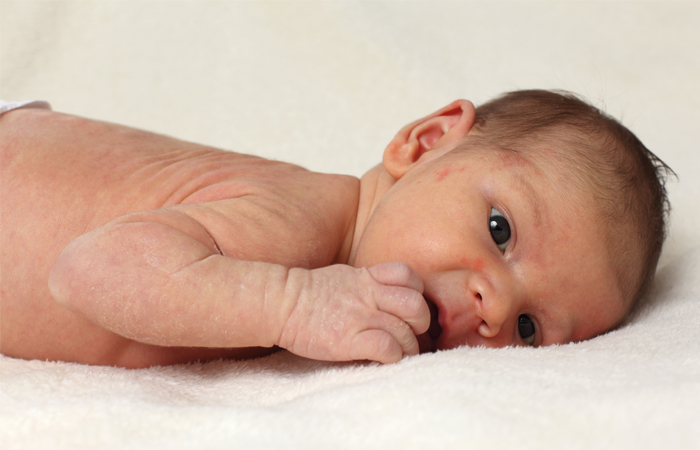
Common symptoms include patches of red, dry, itchy skin on the cheeks, forehead and scalp, behind the ears and in the creases of the neck, knees and elbows. The condition can also ‘flare up’. When this happens, symptoms will worsen and the skin can become infected.
The cause of eczema is unknown, but it tends to be common in families who have a history of eczema, hayfever and asthma. ‘Atopic’ means sensitive to allergens.
Eczema may also be triggered by food allergies, including cows’ milk; exposure to other allergens, such as house dust mites; environmental factors, such as cold and dry weather; irritants such as scratchy woollen clothes and sweat; and even stress can worsen symptoms.
A GP will often be able to diagnose atopic eczema by assessing the child’s skin. There is no cure for atopic eczema, but the condition often improves as children get older. It is, however, important to manage symptoms. An effective skincare routine – known as complete emollient therapy – is a key part of controlling symptoms. Parents are advised to:
Flare-ups may be triggered by exposure to allergens such as house dust mites
Research has shown that infants with a family history of allergy who are fed infant formula milk based on intact cows’ milk protein have double the risk of developing atopic eczema compared to breastfed infants. Breastfeeding provides the best protection against allergy development, but if exclusive breastfeeding is not possible, a special infant formula milk, such as SMA H.A. Infant Milk, that can help reduce the risk of an infant developing atopic eczema could be suitable. This should be used from the first formula feed onwards, either in combination with breast milk or on its own, where necessary.
 Important
SMA H.A. Infant Milk should not be used if a baby has already been diagnosed with, or is suspected of having, an allergy to cows’ milk protein.
An independent clinical study, the German Infant Nutritional Intervention (GINI) study, demonstrated that SMA H.A. Infant Milk reduces the risk of developing atopic eczema by over 50 per cent in the first year of life and has a sustained, 10-year long-term effect.
 Clinical summary
According to NICE clinical guidelines, an assessment of atopic eczema should consider the impact of the condition on quality of life and wellbeing, as well as the state of the skin, bearing in mind that the two may not be directly related.
Management is stepped:
• Avoidance of trigger factors, which may include irritants, skin infections and contact, food and inhalant allergens. Inhalant allergy should be considered in eczema associated with asthma or allergic rhinitis and in children who experience seasonal exacerbations or have facial symptoms, particularly around the eyes. Food allergy should be suspected in cases where other management strategies have not worked and GI symptoms (colic, vomiting, diarrhoea) or failure to thrive are present. A six- to eight-week trial of extensively hydrolysed protein or amino acid formula in place of cows’ milk products may be appropriate
• Emollients used continuously, even when the skin is clear, for washing as well as moisturising the skin
• Topical corticosteroids, at the lowest effective potency, applied only to areas of active atopic eczema. In children with frequent flare ups, symptoms may be kept at bay by using topical steroids regularly for two consecutive days per week rather than when needed
• Localised bandaging – using either medicated or dry dressings – over emollients can help treat flares or localised skin thickening. Whole body wrapping, whether wet or dry, requires specialist supervision
• Non-sedating antihistamines may be offered as a trial, where there is severe itching or urticaria (hives). This should be reviewed regularly
• Sedating oral antihistamines are occasionally prescribed for seven to 14 days for children aged six months or over if an acute flare is disturbing sleep to the extent that it is having a significant impact on the child or parents.
Potent topical corticosteroids are not usually prescribed for infants under one year of age, and topical calcineurin inhibitors (tacrolimus, pimecrolimus) are not recommended in children under two years of age.
Education is a core element of eczema management. Important aspects to cover include how much of each product to use and how often, when and how to step treatment up or down, and how to recognise infected eczema.


