


 4 Min
4 Min In Campaigns

Follow this topic

Bookmark

Record learning outcomes
On 14 July, the NHS announced its aim to prevent thousands of deaths from sepsis by 2035, aided by wearable devices worn as watches or bracelets that will track symptoms in at-risk people. Sepsis is a life-threatening response to an infection in the body and is estimated to cause around 4,000 deaths a year in England.
By causing significant damage to tissues or organs, it can quickly escalate to an emergency; for every hour of delayed treatment, the risk of death increases by up to 8 per cent, says the NHS.
With all this in mind, the timing of World Sepsis Day on 13 September marks an important opportunity for the pharmacy team to campaign for awareness around prevention, symptoms, who is most at risk, and what to do if sepsis is suspected.
What is sepsis?
One of the first aims of World Sepsis Day is to make clear what sepsis is. “Sepsis arises when the body’s response to an infection injures its own tissues and organs. It may lead to shock, multi-organ failure, and death – especially if not recognised early and treated promptly,” says the organisation.
Naturally, the body’s immune system will try to fight an infection, which is an amazing function of the body. But sometimes, the reaction is an overreaction. Once sepsis has begun, it can take as little as 12 hours to become fatal.
Who can get sepsis?
As mentioned, sepsis occurs when the immune system overreacts to an infection. A person’s risk of developing sepsis may be affected by factors like age, genetics, pre-existing health conditions and the type of infection.
Bacterial infections are the most common cause, and so pharmacy teams should be alert to the potential of sepsis in customers with chest infections (pneumonia), urinary tract infections (UTIs), abdominal infections like appendicitis, and skin infections like cellulitis or infected wounds.
The following customers will also have a higher chance of getting sepsis:
- Babies aged under 12 months
- Those over 75 years
- Those who are pregnant
- Those who have given birth or had an abortion or miscarriage in the past six weeks
- Those with a weakened immune system due to conditions like HIV or sickle cell disease
- Those receiving treatment such as chemotherapy, corticosteroids or immunosuppressants which weaken the immune system
- Anyone with a burn, cut, wound or skin infection like cellulitis
- Anyone with a catheter
- Anyone injecting illegal drugs or misusing alcohol.
Signs to look out for
Symptoms of sepsis usually develop quickly. In babies and children, pharmacy teams should be aware that symptoms include:
- Difficulty breathing, or breathing very fast
- Seizure
- A high or low temperature
- Blue, grey, pale or blotchy skin, lips or tongue. On black or brown skin this may be easier to see on the palms of the hands or soles of the feet
- A rash that does not fade when you press it. This type of rash is rare in sepsis but may be a symptom of meningitis, which requires urgent medical attention
- Being sleepier than normal or difficult to wake
- For babies and children under five, not urinating in the last 12 hours
- Not urinating all day (for children five years and over)
- Babies and children under five years may also not be interested in feeding or they may keep being sick (vomiting).
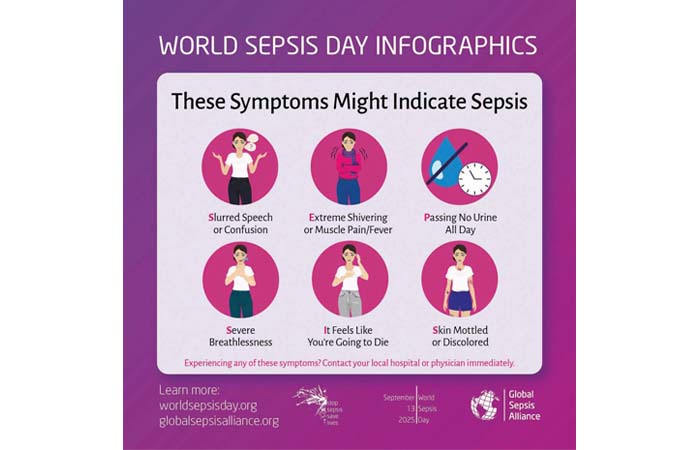
In adults, pharmacy teams can tell customers to look out for, and should themselves be aware of, the following symptoms:
- Confusion or slurred speech
- Uncontrollable shivering
- Muscle pain
- Difficulty breathing
- Blue, grey, pale or blotchy skin, lips or tongue, which again may be more visible on the palms of the hands or soles of the feet on black or brown skin
- Not urinating all day or urinating very little in the past 18 hours.
Anyone with these symptoms should call 999 immediately.
Antibiotics and sepsis
The best way to prevent sepsis is to prevent an infection in the first place. Where this is not possible, customers need the best possible chance of their infection being treated.
World Sepsis Day notes a key pathway to limiting infections is by increasing awareness of antimicrobial resistance. Broad-spectrum antibiotics are used to treat sepsis initially – treatment may be more tailored once the cause of the infection has been confirmed – and it is imperative that patients can respond to the drugs used to treat their infection.
“The indiscriminate use of antibiotics must be stopped,” says World Sepsis Day. “The excessive use of antibiotics in outpatient care over the past several years, for example for viral infections, where antibiotics are useless and harmful, has led to a drastic increase in antibiotic-resistant bacteria. The appropriate steps in preventing resistance include the targeted and prudent use of antibiotics.”
For more information on sepsis, including tips on recovery, possible complications and more visit:

Share:


In Campaigns