



 4 Min
4 Min In Conditions

Follow this topic

Bookmark

Record learning outcomes
Few things see people racing to the pharmacy faster than the discovery of parasites. The idea of something living on or inside them is understandably distressing to many patients who want these invaders gone – and quickly.
Some customers may also feel embarrassed or concerned about the perceived social stigma, even though conditions such as head lice and scabies are common.
Fortunately, pharmacy staff are well placed to separate the facts from the fiction, and reassure patients that these conditions are treatable.
“Pharmacy teams can make a real difference by providing a calm, non-judgemental and confidential environment where patients feel comfortable asking questions,” say specialist dermatology pharmacists Arlene McGuire and William Price, spokespeople for the British Association of Dermatologists (BAD) and co-chairs of the BAD Pharmacy Working Party Group.
Here, we look at some conditions you might encounter – and how you can help. As with any medicines, always take into account the patient’s age and any contraindications.
Head lice
Common among primary school pupils – though they can affect adults too – these small, wingless insects feed on blood from a host’s scalp. Their life cycle has three main stages – eggs (often called ‘nits’, though these are actually the empty cases), nymphs and adults – and the latter can live for up to 30 days, though they don’t survive for long if they come off the head.
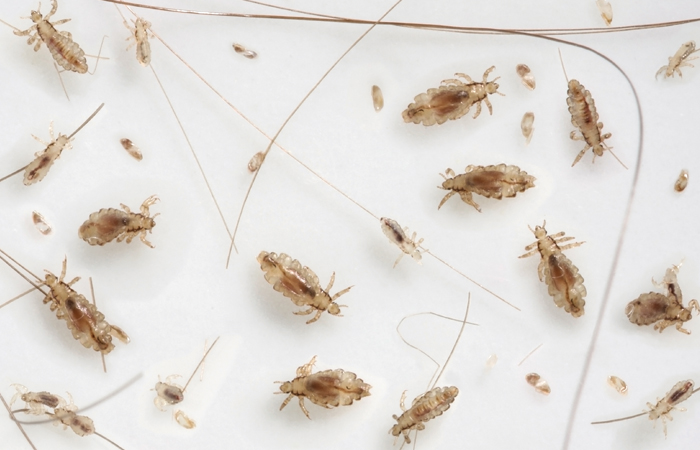
Despite the fact that head lice predate the Bronze Age, a number of widespread myths still persist. One is that everyone who gets them will itch.
“The itch is an allergic reaction to the saliva that lice inject, but not everybody is allergic to that,” says Dee Wright, founder of head lice removal service The Hairforce (hairforceclinics.com). “Another myth is that they fly or jump; they just crawl very fast – 23cm in a minute.”
Further fallacies abound, such as the notion that children with short hair won’t get them (“we see boys with hundreds,” says Dee), and perhaps the most damaging of all – that head lice prefer dirty hair. “Clean or dirty, they don’t care.”
Though head lice don’t transmit diseases, they can still affect a child’s wellbeing. “Heavy infestations are not good for their health,” says Dee. “They can become anaemic because the lice are feeding on their blood. Or they may suffer from disturbed sleep, irritability, poor concentration and social withdrawal.”
If itching isn’t present, the first time families may think about head lice is when they’re alerted to a case by a contact. At this stage, vigilance is key, using a fine-toothed detection comb.
“The best way to check the hair is to divide it into sections if you can,” says Dee. “Apply some leave-in detangling conditioner and nit comb through the hair, section by section.”
If live head lice are found, the rest of the family should be examined, and anyone affected treated on the same day. Lice can be removed by wet combing, and details on how and when to do this can be found on the NHS website (nhs.uk).
The reason the combing process is so important – and needs repeating – is to get all the eggs out, explains Dee. “When they are laid they are essentially invisible sacs of liquid, so when you find a lice infestation there are going to be a whole bunch of eggs you cannot see.”
There are also sprays and lotions available from the pharmacy, such as products containing dimeticone. However, it’s important that patients read the packaging carefully and don’t go off-piste in their panic.
“It’s a very experimental market – people will use as many things as they can to try to drive effectiveness,” says Dee. “They don’t always pay attention to the instructions – like, ‘It said five minutes, but I left it on for two days’.”
Even when patients use a product, they shouldn’t neglect the combing, Dee advises. “Head lice products often put a free comb in their boxes for a reason, but people are very casual about the combing; they’re not always interested in doing that level of hard work.”
Once the head lice and eggs have been eradicated, parents should check the patient regularly and encourage them to avoid hair-to-hair contact. “Keep long hair tied back,” says Dee.
“For girls, we say put it in a ponytail then plait it; for boys with shorter hair, regular checks should help parents stay on top of it.”
“When you find a lice infestation there are going to be a whole bunch of eggs you cannot see”
Ticks
Ticks are small, spider-like parasites that live in outdoor spaces such as long grass, woods and parks. Like head lice, they can’t jump or fly; instead, they attach themselves to people and animals who brush past them, and feed on their blood for several days before dropping off.
The bites may cause symptoms such as redness, itching and swelling.
Ticks can be removed using a tick-removal tool or fine-pointed tweezers; there is a guide to each method at lymediseaseuk.com/tick-removal. Once the tick is out, patients should disinfect the area (e.g. with an antiseptic wipe).
If the patient has a round or ‘bullseye’ rash (not always present) or flu-like symptoms, and has been bitten by a tick or visited a potential tick habitat in the past three months, they should call 111 or see their GP urgently, as these may be signs of Lyme disease.
If diagnosed early, this tick-borne bacterial infection can usually be treated with a prescription for antibiotics – but if left unchecked it can cause more severe symptoms later on, such as heart problems and joint pain.
To help reduce the likelihood of tick bites while outdoors, people should stick to paths, apply insect repellent, keep skin covered where possible (tucking trousers into socks in high-risk areas), wear light-coloured clothing that make ticks easier to spot, and check for them regularly and afterwards.
Scabies
This is caused by tiny mites that burrow into the skin, triggering intense itching – particularly at night. It’s thought to affect more than 400 million people a year globally, according to the World Health Organisation, and is contagious, usually spreading via close skin-to-skin contact.
Patients may present with a raised rash or spots, which can resemble other conditions, sometimes leading to delays in diagnosis.
“I first noticed a rash in spring 2023, which got worse,” says Danielle, speaking about her experience with the infestation. “It was all over my body and it felt like my skin was on fire. I had no clue what it was.
“I went to the doctor and at first they thought it might be dermatitis or something. I even tried a sexual health clinic. Then my teenage son got it too – in total I think we went to the doctor about 10 times between us. Eventually, I saw an NHS dermatologist who diagnosed scabies.”
“Scabies is thought to affect more than 400 million people a year globally”
As Danielle learned the hard way, the infestation grows worse the longer it’s left. “Community pharmacy teams play a vital role in recognising the symptoms, providing evidence-based advice and directing patients to appropriate treatment or onward referral when needed,” says Arlene.
Patients under two or with other skin conditions such as eczema should see their GP.
“The first-line treatment for most people is a topical scabicide containing permethrin 5% cream, which is available to purchase over the counter from pharmacies,” continues Arlene.
“Treatment should be applied carefully to the whole body according to the manufacturer’s instructions and repeated after seven days to ensure that any newly hatched mites are also treated.”
“Scabies can be surprisingly difficult to eradicate, but in the vast majority of cases this is not because the mites have become resistant to treatment,” adds William.
“The most common issue is incomplete application.” Patients should take care not to miss areas such as between the fingers and toes, under nails, or soles of the feet.
“Equally important is that all close household and intimate contacts are treated simultaneously. If one person is treated while another remains untreated, the infection can simply be passed back again.” For a useful guide to application, see bad.org.uk/pils/scabies.
On the first day of treatment, clothes, bedding and towels should be washed on a hot cycle (60°C) and tumble dried if possible; non-washable items can be put in a sealed plastic bag for at least three days. Patients should avoid close contact with others for 24 hours.
“Patients should also be advised that itching may continue for several weeks after treatment, and this does not necessarily indicate ongoing infestation,” adds Arlene.
“Emollients, topical corticosteroids where appropriate, and antihistamines in selected cases may help manage symptoms while the skin settles.”
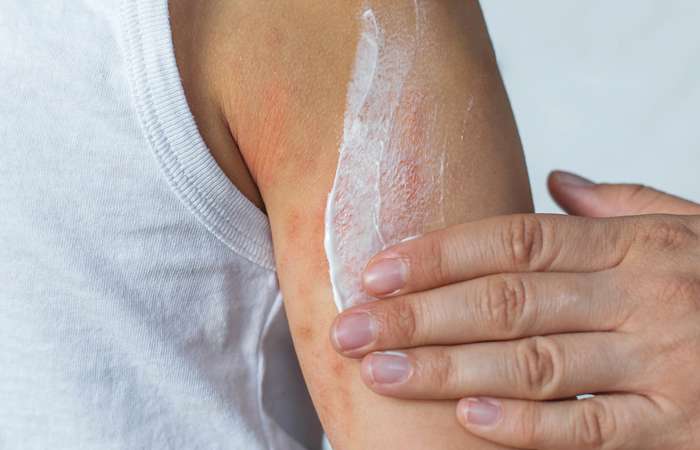
Danielle says that despite applying treatment and following the cleaning measures, she and her son still struggled to shift the scabies.
In desperation, they went to a private specialist and were prescribed ivermectin, an antiparasitic medicine. “In the UK, oral ivermectin is a prescription-only medicine,” says Arlene.
“It is generally reserved for specific situations, such as crusted scabies [a highly infectious and potentially serious type requiring urgent medical assessment], outbreaks in care settings, when topical treatment has failed despite being used correctly, or when applying a topical treatment is impractical.
The decision to prescribe ivermectin should be made by an appropriate healthcare professional after assessing the individual patient’s circumstances.”
Danielle has now been scabies-free for two years, but her son, who is autistic, remains terrified of catching it again.
She says: “He won’t use creams now, as it’s a sensory recall of the worst time in our lives. If I can raise awareness of the symptoms, other people may be able to avoid the suffering we endured for nearly a year.”
Red alert
For skin conditions such as scabies, “red flags include signs of secondary bacterial infection such as spreading redness, increasing pain, swelling, pus or fever,” says William Price, dermatology pharmacist and spokesperson for the British Association of Dermatologists.
“Patients with severe skin disease, significant immunosuppression or diagnostic uncertainty should also be assessed by a doctor.”
While tapeworm symptoms are usually mild, in rare cases the larvae of a certain type of tapeworm can cause problems in other organs, such as the brain, lungs or heart.
This may lead to symptoms such as seizures, headaches, vision issues, jaundice or coughing, and requires urgent medical attention.
Anyone showing signs of anaphylaxis – for example, following a bite – requires immediate hospital treatment.
This list of red flags is not exhaustive, and patients should seek medical advice if concerned.
Threadworms
Threadworms – like the name suggests – resemble small, white pieces of thread. Also known as pinworms, they’re more common in childhood and infect the gut; parents might spot them in a stool or on their child’s bottom.
These parasites lay eggs around the anus, usually at night, which can lead to disturbed sleep and severe itching.
They typically spread when eggs end up on hands, such as during scratching, and are transferred to surfaces that someone else touches, before ending up in their mouth (e.g. when eating).
Threadworms can usually be treated with mebendazole from the pharmacy, which comes in tablet and liquid options.
All household members should be treated, unless they are under two years or there are other contraindications, in which case, they should speak to their GP.
To reduce the risk of reinfection, families should practise scrupulous hygiene for a fortnight, or for six weeks if not taking medicine, according to the NHS website. This includes:
- Cleaning hands (including under nails) thoroughly before meals and after using the toilet
- Keeping nails short
- Frequently washing pyjamas and bed linen on a hot wash (trying not to shake them)
- Vacuuming the home and disinfecting surfaces
- Wearing underwear overnight and changing it in the morning
- Showering or bathing each morning to remove new eggs.
Tapeworms
Tapeworms are long and flat, with a ribbon-like appearance, and can grow in the gut if eggs are ingested.
There are several ways this can happen, such as eating certain undercooked meats or freshwater fish, or drinking contaminated water, for example while travelling.
Some patients may have no noticeable symptoms but spot a piece of worm in their stools; others may present with weight loss or a stomach ache, diarrhoea or nausea.
Reassure the patient that a tapeworm infection can be treated and refer them to their GP, who can prescribe medicine.
To reduce the risk of reinfection, patients should practise good hygiene and wash hands well after going to the toilet or before handling/eating food.
Other preventive measures include drinking bottled water in high-risk areas, washing fruit and vegetables before eating, and avoiding undercooked meat or fish.


Share:


In Conditions