6 Min
6 Min
In OTC training

Bookmark
Learning objectives
- Understand who may be affected by dry skin and eczema
- Understand the psychological impacts of living with atopic eczema
- Be able to identify atopic eczema triggers
- Feel confident advising on a treatment path.
If skin loses moisture – including water, fats and oils – it becomes dry, and irritants and bacteria can pass through cracks to its deeper layers, causing irritation. In response, white blood cells and fluid rush to the area and the accumulation of these white blood cells causes swelling and inflammation, leading to further irritation and itchiness. Inflamed skin can appear red on lighter skin, and darker brown, purple or grey on darker skin. It can also be more difficult to see on darker skin.
This inflammation can become chronic, and the natural barrier of the skin compromised, which can lead to long-term, uncomfortable and irritable skin that can feel dry, itchy, cracked and sore, and have a significant impact on quality of life.
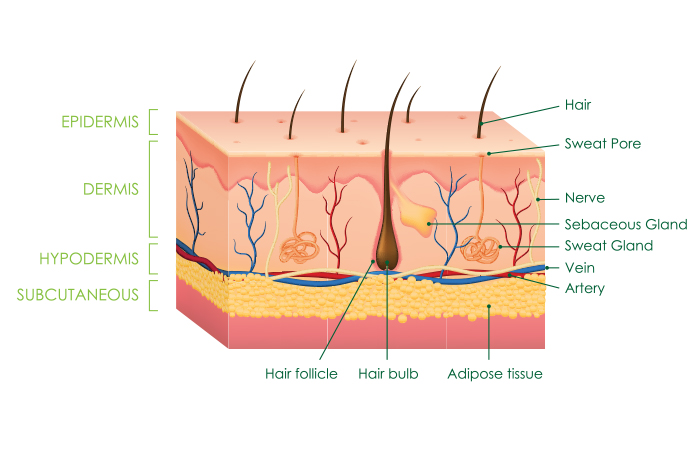
The diagram below shows the structure of human skin: