


 2 Min
2 Min In Practice

Follow this topic

Bookmark

Record learning outcomes
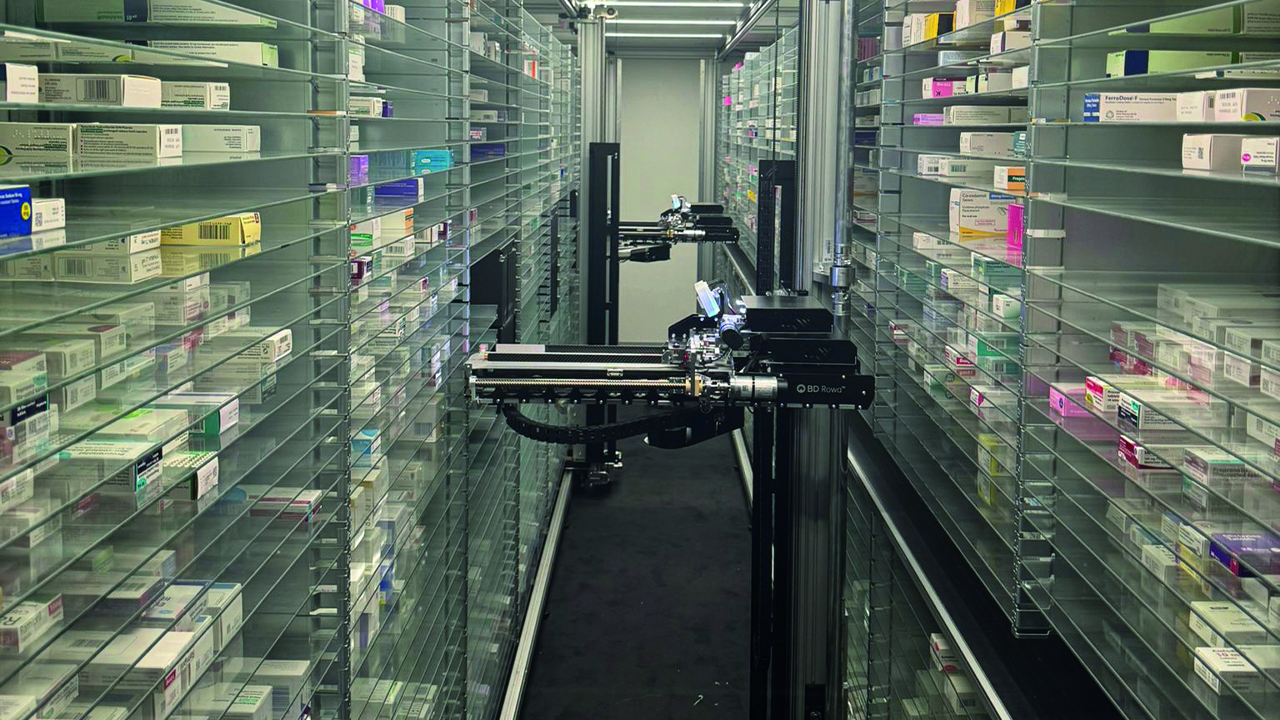
First thing each Monday morning, a familiar rhythm plays out in Christchurch Pharmacy, Essex. Prescriptions now arrive electronically rather than by paper, but, until recently, the rest of the process would have looked much the same as it did 30 years ago – labels printed, boxes pulled from shelves, baskets stacked high on the dispensary bench. And then the robot arrived.
New ways of working
Alongside a more modern PMR system and digital patient engagement tools, the robot promised to reorder the workflow entirely. Automated dispensing, barcode verification and electronic triage began to replace steps that staff had performed almost instinctively for decades.
Integrating new technology into a system that has received limited modernisation over the years is bound to be fraught with challenges. Although pharmacists often lead transformation, much of the day-to-day adaptation usually falls to the support staff. The implementation of new technology means that dispensers, technicians and the counter team no longer perform the same functions in the same way, significantly changing the speed and efficiency of pharmacy processes.
Paul Mayberry, founder of PharmacyX, the digital software provider for Christchurch Pharmacy, believes lack of innovation within the sector stems from PMR companies. Community pharmacies rarely switch systems because migration can be disruptive, time consuming and risky in a regulated environment. Once installed, a PMR becomes deeply embedded in daily workflows, reimbursement processes and compliance reporting, which creates high switching costs and long customer lifecycles.
Christchurch Pharmacy healthcare practitioner Hannah Bayes explains that tackling engagement and training with the new technology was a whole team effort. There was a fair amount of trial and an initial technological learning curve. However, repeated and consistent training for staff and customers enabled a better understanding of the processes and why they were being updated. “The robot and PharmacyX together work so efficiently,” says Hannah. “So we have to make ourselves more efficient. We have to change ourselves around technology.”
Efficiency meets clinical freedom
Traditionally, pharmacists would sit at the centre of the dispensary, overseeing stock, answering queries and checking every item. Now, with automated dispensing and pre-saved clinical checks, their presence is no longer required in the middle of the process. Time previously spent on tasks that did not require clinical judgement has been redirected towards appointments that do.
“It's hard to imagine how we survived without these functions previously”
The robot takes away the majority of the human error element, and PharmacyX’s digital system works in conjunction with that to improve efficiency.
Robotic dispensing also allows staff to engage with the community aspect of the pharmacy in a far more meaningful way. While the robot handles dispensing, the pharmacy team can gauge a better understanding of their patients’ problems and provide advice without the time pressure. “Rather than saying, ‘Oh, the technology is now going to take over your job’, it’s actually a matter of ‘It’s going to take over that boring bit of the role. I can now become more clinical,” says Paul.
“There would not be the time to be able to do half as much of that if we didn’t have a robot,” adds Hannah.
So, far from taking over, the technology has allowed the team to provide a more human service than ever before, alongside increasing their clinical capabilities.

System shake-up
The key to making sure this technology is utilised as efficiently as possible is, first and foremost, involving the whole team from the get-go, says Paul. This guarantees that staff can properly understand and engage with the changes, whilst uncovering any practical issues that tech planners could miss.
Digital training must be continuous to keep teams as confident as possible. Introducing new technology that eliminates traditional dispensary steps that have been in place for decades is bound to be daunting, but the changes in workflow will be embraced if understood properly. The goal here is to make sure the team feels empowered to hand over control to the technology, rather than viewing it as a replacement for their expertise. Both parties working in harmony produce the best possible results.
It takes some getting used to, but ultimately, the new tech has vastly improved accuracy within prescriptions, lightened the workload for staff and allowed patients and team members to connect in a more personal way when discussing care.
The human element
“As with many other aspects of technology, it’s hard to imagine how we survived without these functions previously, and within pharmaceutical operations, the sky is the limit when improving efficiency,” says Hannah. She emphasises that the human element within community pharmacy will always be interconnected with the technology. Although the barcode checking system significantly reduces the risk of human error, customers will always have questions, and pharmacy teams are best suited to answer these.
Could robots do this? Maybe. But preserving this human element makes patients and team members feel heard and seen.
Success in digital transformation depends not on the tech itself, but on people feeling they are part of the journey.
Find out more about PharmacyX here.

Share:


In Practice