


 6 Min
6 Min In Conditions

Follow this topic

Bookmark

Record learning outcomes
Obesity in children and teenagers remains a major public health concern in the UK. In the Health Survey for England, 2024, published in January 2026, 15 per cent of children aged two to 15 years were living with obesity, and 26 per cent were either overweight or living with obesity.
The prevalence of obesity increased with age and was more likely to occur in deprived areas and/or if one or both parents were also overweight or obese.
Another publication, the Government’s National Child Measurement Programme (NCMP) for England (2024/25 school year), found equally worrying results.
“The NCMP 2024-25 data is a stark reminder that poor child health remains a serious issue across England – particularly among children living in the most deprived areas and those of Black African heritage,” says Katharine Jenner, executive director of the Obesity Health Alliance. “Every child deserves the chance to grow up healthy, regardless of their background.”
Weight matters
According to the NHS, children who stay a healthy weight tend to be fitter, healthier, better able to learn and more self-confident. Research shows that children who are overweight or obese are likely to be the same in adulthood.
This increases their risk of other long-term health conditions, such as type 2 diabetes, coronary heart disease, stroke and some types of cancer. It can also affect their mental health.
Tackling obesity in children and teenagers often needs a whole family approach. According to the NHS, children are more likely to stay a healthy weight and grow up healthy if their parents encourage them to do so.
They are also more likely to follow healthy habits if their parents or guardians do too.
Weight is a sensitive issue, so the topic needs to be approached carefully by healthcare professionals. A January 2026 survey conducted by the Medical and Dental Defence Union of Scotland (MDDUS) found that four in five GPs believe it’s challenging to discuss a child’s weight and health with parents or guardians, with concerns about causing shame or stigma, parents becoming upset or angry and fears about damaging trust with the family.
However, action is needed on a local and national level, to protect children’s long-term health.
Unhealthy lifestyles
The causes of obesity are complex, but the same basic weight management rules apply to children and teenagers as to adults: consuming fewer calories than are being used up during physical activity.
The biggest risk factors for obesity in children and teenagers are an unhealthy diet (especially junk foods and sugary drinks), a lack of exercise, too much time spent sitting (often due to too much screen time) and not enough sleep.
According to the NHS, eating well is essential for children’s health and wellbeing. However, in deprived areas in particular, many parents are struggling to afford to feed their children a healthy, balanced diet.
The Government is currently consulting on plans to update the School Food Standards for the first time in over a decade, with a focus on making school meals healthier, more balanced and more consistent across all schools. However, the updated standards will not be fully in place until September 2027 at the earliest.
Children’s home environments are important too. New Government regulations have restricted junk food advertising on television before 9pm and online at all times.
According to a research study presented at this year’s European Congress on Obesity, more than half of parents in England are frequently pestered by their children or teenagers to buy products loaded in fats, salts and/or sugar when food shopping in stores or online.
Almost three-quarters of parents reported giving in to requests for junk food, often triggered by eye-level product placement, child-friendly characters on packaging, and instore and media marketing.
Children influence unhealthy food purchases through tantrums, nagging and trolley loading, while often explicitly referring to TV adverts or social media influencers.

Research shows that children are more likely to adopt balanced eating habits if the whole family participates.
“Every child deserves the chance to grow up healthy, regardless of their background”
Healthy eating guidelines
There is very little official guidance on precisely how much food children and teenagers need. Ideally, children should have small servings (on child-sized plates).
If they are still hungry, they can always ask for more. Children and teenagers should also not be forced to finish everything on their plate or eat more than they want to.
The most important thing is to make sure that meals and snacks are as healthy as possible. The NHS Eatwell Guide shows how much of each food group adults and children over two years should eat to achieve a healthy, balanced diet.
The balance does not need to be correct with every meal but should be correct over a day or even a week.
Children and teenagers, just like adults, should aim to eat five or more portions of a variety of fruits and vegetables every day.
This includes fresh, tinned, frozen and dried fruit. 100 per cent fruit juice, vegetable juice and smoothies only count as a maximum of one portion. Since these can increase the risk of tooth decay, it is best to limit them to mealtimes only.
Children and teenagers should get a third of their calories from high fibre starchy foods, such as wholemeal bread, potatoes with skins left on, wholewheat pasta and brown rice, as these are good sources of energy and many essential nutrients.
Milk, cheese, yoghurt and fromage frais are important sources of protein and calcium, which helps to keep bones healthy.
Meat, fish, eggs, beans and pulses and other high-protein foods are important for growth and development.
Children and teenagers ideally need at least two portions of fish every week, one of which should be oily, such as salmon, sardines or mackerel.
Iron-rich foods, such as red meat, dark green vegetables and fortified breakfast cereals are particularly important for teenage girls.
Children and teenagers should be discouraged from having sugary or high-fat foods on a regular basis.
This includes fast food, sweets, cakes, biscuits, crisps, chocolate, sugary cereals and sugar-sweetened soft and fizzy drinks.
“Children and teenagers should not be forced to finish everything on their plate”
Activity guidelines
According to the NHS, school-aged children need around 60 minutes of physical activity every day for good health.
However, the Playground Rules report by the Royal Society for Public Health published last June, revealed that more than half of children and young people do not meet the guidelines for physical activity.
Children who are physically active – through play, competitive sport or even just walking to school – are more likely to continue these healthy habits into adulthood.
They do not need to do this activity all at once, but can do spurts throughout the day. This could involve walking to school or the shops, and participating in activities like swimming, skipping, martial arts or dancing during or after school and on weekends.
Children under five years of age need more than three hours’ activity a day. This could be active play, such as ball games, chasing games, playing in the park or riding a bike or scooter. The activities should make children breathe faster and feel warmer.
Parents should limit screen time and encourage their children to be more active. In March last year, the Government issued new screen time guidelines for young children.
These state that under-twos should not have any screen time at all (other than shared activities to encourage bonding, interaction and conversation).
Children aged two to five years should have no more than one hour of screen time a day (but not at mealtimes or in the hour before bedtime).
There are no official limits for the over-fives, but the NHS suggests no more than two hours each day, other than for education – this includes TV, computer games, internet, social media and mobile phone use.
Too much screen time can affect a child’s sleep, and the less children sleep, the more likely they are to become overweight.

Games, playing in the park and taking part in sport are great ways to get children moving more – and it’s fun.
Treating pain and fever
A fever with or without pain in a child or teenager is usually a sign of an infection, such as a cold, Covid or flu. Pain on its own may occur after a bump or scrape but can also be general aches and pains or headaches.
While pain and fever should clear up after a few days, there are things caregivers can do to ease the pain and speed up recovery.
Paracetamol and ibuprofen are the recommended first-line medicines for mild to moderate pain and fever in children.
Children need lower doses than adults, so it is important to use junior (and sugar-free) products at the right strength for the child’s age.
They should not take both medicines together unless they have been advised to by a healthcare professional – and if they do, parents need to note down when they have given their child each dose to avoid an accidental overdose.
Aspirin should not be given to under-16s unless it has been prescribed by a doctor, due to the risk of a rare but dangerous illness called Reye’s syndrome.
Doctors generally do not recommend medicines for a fever unless it is making the child distressed or unwell.
This is because the fever is helping the child’s body to fight an infection. Instead, parents should give their child regular fluids (such as water or diluted juice) so they don’t become dehydrated.
Dressing their child in layers can help to prevent overcooling or overheating, and sponging them with cool water may lower their temperature.
To ease pain, gentle massage, a heat pack or warm bath may help. Refer to the pharmacist if a parent reports pain and fever that persists or is worried about their child.
“Action is needed on a local and national level to protect children’s long-term health”
Five things that may trouble a child’s skin
1. Chickenpox
Chickenpox causes an itchy, spotty rash anywhere on the body, often after flu-like symptoms. The spots will blister and may leak fluid before forming a scab, usually five days after they first appear.
OTC advice includes paracetamol to reduce pain, antihistamines to ease itching, avoiding scratching, using OTC cooling creams or gels, and bathing in cool water. Ibuprofen should not be used in chickenpox, unless advised by a doctor.
2. Insect bites
Insect bites may trigger a mild allergic reaction, causing itching and raised, red skin around the bite. Discomfort can usually be eased with a cold compress, antihistamines and painkillers.
Most insect bites get better after a few days but can occasionally become infected, causing very red or hot skin, significant swelling and sometimes leaking pus or fluid.
Children aged one year and older with infected insect bites can be prescribed antibiotics through Pharmacy First if required.
3. Eczema
Atopic eczema affects around one in five children. It causes dry, itchy and red skin that tends to flare up and down.
Common flare-up triggers include allergies (e.g. to house dust mites, pollen or food), being unwell, soap, washing detergents and temperature changes. Eczema often improves or even clears up completely when children get older but it can persist into adulthood.
Mild to moderate eczema can usually be managed with trigger avoidance, using emollients (moisturisers) two to three times a day, washing with soap substitutes, and applying corticosteroid creams, lotions and gels.
Moderate to severe cases may need stronger prescribed treatments.
4. Warts and verrucas
Warts are small, firm, raised lumps on the skin with a cauliflower-like texture. Verrucas are warts on the soles of the feet – usually white and flat, with a tiny black dot under the surface.
Warts and verrucas are caused by the human papillomavirus (HPV) and are not harmful. However, they can be itchy, painful or embarrassing and can take months or years to clear up on their own.
Some OTC wart and verruca treatments are suitable for children. Children can also be referred to a GP or podiatrist for verrucas. Good hygiene is important to stop warts and verrucas from spreading to other people.
5. Pimples/acne
Spots and acne are most common among teenagers, and are often triggered by hormonal changes that increase the skin’s oil production.
This causes spots and oily skin, generally on the face, back and chest. A good skin cleansing routine and avoiding triggers such as oil-based make-up, skincare and suncare products can help to reduce spots.
There are many different OTC spot and acne treatment products on the market – it is usually a case of trial and error to find the most effective solution.
If OTC products do not work, customers should be referred to discuss prescribed treatments, such as topical or oral antibiotics and topical retinoids.
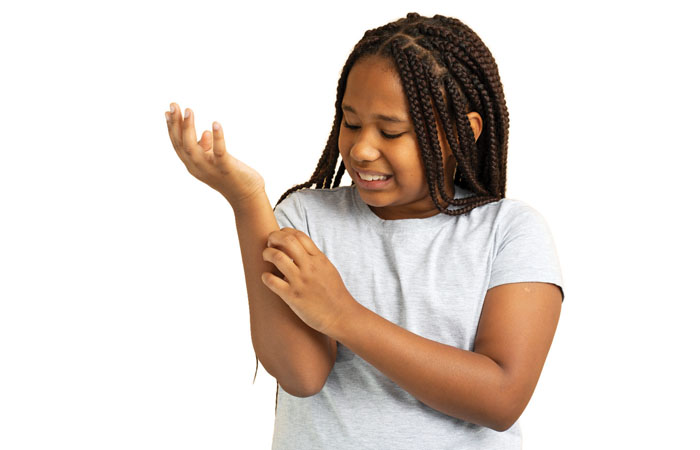
If an insect bite becomes infected, children over one year can be referred into Pharmacy First.

Share:


In Conditions