



 3 Min
3 Min In Conditions

Follow this topic

Bookmark

Record learning outcomes
First aid is not confined to a particular part of the body, physiology or psychology. It encompasses all of these, as it is the immediate, temporary and in some cases life-saving care given to someone who has become suddenly ill or injured.
Good first aid practices can prevent an injury from worsening, reduce pain and preserve function.
“Everyday first aid triggers include slips and falls, over-exertion, workplace accidents, gardening or DIY incidents, and use of improper lifting techniques,” says pharmacist Noel Wicks, an advisor to Deep Heat, Deep Freeze and Deep Relief.
“Sports injuries are common, both acute and those developed from more repetitive movement, so seeing customers come into the pharmacy with pain after exercise is likely to be a frequent occurrence.”
Pharmacy staff may also receive calls from concerned patients or caregivers seeking reliable advice. Noel suggests taking control of the conversation with a steady voice, and speaking slowly.
“If the caller starts to get agitated or worked up, don’t tell them to ‘calm down’ – it’s unlikely to work,” he advises.
Instead, it is better to ask direct, specific and easy-to-answer questions. “What happened? When? How? What have you tried already? Is there any severe bleeding? If they are calling on behalf of someone else, are they conscious, breathing, etc.? If you need to, repeat your questions in a soft but firm tone,” Noel suggests.
“If the member of staff identifies any red flags, they should calmly clarify that they have understood the information correctly and signpost the caller accordingly to the GP, urgent care, minor injuries unit or A&E as appropriate.”
Let’s look at several scenarios that could present in the pharmacy – from medical emergencies to sporting injuries.
Battling for breath
An asthma attack is an incident that needs immediate attention. “Common asthma attack symptoms are wheezing, breathlessness, a cough or a tight chest,” explains Nazir Hussain, clinical lead at the charity Asthma + Lung UK.
Attacks can be triggered by a range of factors, including respiratory infection, pollen, animals, pollution or smoking. Patients may find it helpful to keep a diary of what they were doing at the time, to help them identify things to avoid in future.
“Pharmacy teams can support people with asthma by ensuring they have access to their prescribed reliever inhaler,” says Nazir.
They can also support people with inhaler technique or refer them to the pharmacist for medication reviews, so that they are confident about how their medication works.
If a concerned patient or carer phones the pharmacy about an asthma attack, Nazir suggests staff should advise the patient to take their reliever inhaler, according to their personalised asthma action plan, while carers can help their loved ones stay calm, sit them in a comfortable position, and help them to use the inhaler.
“If people show little to no improvement after using it, or do not have their reliever with them and are struggling to breathe, they should always call 999,” says Nazir.
“Seeing customers come into the pharmacy with pain after exercise is likely to be a frequent occurrence”
Signs of stroke
A stroke – which occurs when the blood flow to the brain is interrupted – can be fatal, so being able to spot the warning signs is crucial. A good way of remembering what these are is to memorise the ‘FAST’ acronym:
- Face: Does the patient have facial weakness or drooping?
- Arms: Is the patient unable to fully lift both arms and keep them raised?
- Speech: Is the patient slurring or sounding confused?
- Time: If the answer to any of these is yes, it’s time to call 999.
Other symptoms that can come on suddenly might include a severe headache, dizziness, blurred vision or weakness or numbness down one side.
If symptoms only last a short while, it could be a mini-stroke (transient ischaemic attack). This is also a medical emergency requiring a call to 999. For more information, visit stroke.org.uk.
First aid for diabetes
“There are three main diabetes emergencies to be aware of: severe hypoglycaemia (low blood sugar), diabetic ketoacidosis (DKA), and serious foot infections,” says Esther Walden, senior clinical advisor at Diabetes UK.
When it comes to hypoglycaemia, Esther says: “A mild hypo can often be treated at home with fast-acting glucose if the person is awake, alert and able to swallow. However, urgent medical help is needed if they become confused, have slurred speech, a seizure or lose consciousness.”
Carers should not attempt to give food or drink if the person is drowsy or cannot swallow because there is a risk of choking.
“Instead, place them in the recovery position, administer glucagon if available and trained to use it, and call 999,” Esther advises.
DKA is a serious complication caused by a severe lack of insulin, and warning signs include difficulty breathing, persistent vomiting, extreme thirst, confusion, drowsiness, and high ketone levels.
If it occurs, patients should contact their diabetes team urgently, call NHS 111, or attend A&E, depending on the severity of their symptoms.
People with diabetes should also seek prompt medical attention for any sign of a foot infection, including new foot wounds, swelling, discharge, unpleasant odour or changes in the shape of their foot, says Esther.
“If accompanied by fever or flu-like symptoms, this may indicate a serious infection that requires emergency treatment,” she adds.
Spotting red flags
“Pharmacy staff will already be trained in identifying many red flags, such as breathing difficulties or crushing chest pain,” says pharmacist Noel Wicks.
“Thinking of first aid specifically, there are a few to bring to the forefront: vomiting, confusion, drowsiness, or worsening headache after a bang to the head; severe bleeding that soaks through dressings and cannot be controlled with direct pressure; pale, cold, clammy skin; rapid shallow breathing, and weakness/dizziness.
“When it comes to musculoskeletal injuries, red flags are usually easily spotted. If a joint is too painful to move or cannot bear weight; if the joint looks deformed; if there is severe swelling, discolouration, red, hot joints or bleeding, fever, or if the pain doesn’t respond to self-care treatments, the customer should be referred to the GP or hospital/A&E.”
Where patients have chronic conditions, pharmacy teams can help them and caregivers to feel more prepared in the event of an emergency, adds Noel.
“Firstly, they can help patients and their caregivers maintain up-to-date medication lists, including doses and conditions being treated, to have at their fingertips if needed. They can encourage families to hold a 72-hour emergency stash of medication, anticipate early refills, and safely store medications.”
Patients and caregivers can also be shown how to monitor vital signs effectively at home, and be trained to recognise deteriorating health indicators, so they know exactly when to act rather than wait.

Seizures and epilepsy
Seeing someone have a seizure – particularly for the first time – can be scary. Signs might include limbs becoming stiff or floppy, falling down, jerking or shaking, or loss of awareness or bladder control. Some patients describe having sensory disturbances, known as an aura, shortly before a seizure.
The Epilepsy Society gives three key instructions to remember in an emergency – Calm, Cushion, Call:
- Calm: Stay calm and take control of the situation
- Cushion: Cushion their head with something soft
- Call: Call an ambulance.
The charity has downloadable posters on its website that can be displayed in the pharmacy.
Patients with known epilepsy do not always need to go to hospital if they have a seizure. They will usually have a care plan outlining what to do, such as being given emergency medicine and when to phone 999.
You can find out more about epileptic seizures on the Epilepsy Society website at epilepsysociety.org.uk.
Insect bites
Insect bites are more common in summer, and can cause itching and irritation. Management involves cleaning the area with soap and water and trying to avoid scratching.
A suitable treatment, such as an antihistamine or hydrocortisone cream, should help to relieve symptoms. As with any medicine, always check for contraindications and ask the pharmacist if you are unsure of a product’s suitability for a customer.
If the customer thinks they’ve been bitten by a tick and presents with flu-like symptoms, or there is a ‘bullseye’ rash, they should see their GP.
Signs that an insect bite may have become infected include redness, swelling, tenderness or the skin feeling hot to the touch. Infected insect bites can be treated under the Pharmacy First service, as long as the patient is within the specified age range (one year and over) and meets certain other criteria.
The pharmacist can assess them following a defined clinical pathway and, if necessary, supply a short course of antibiotics or make an onwards referral.
If a patient is experiencing severe difficulties, such as showing signs of anaphylaxis or suspected sepsis, they need immediate medical attention and a call to 999.
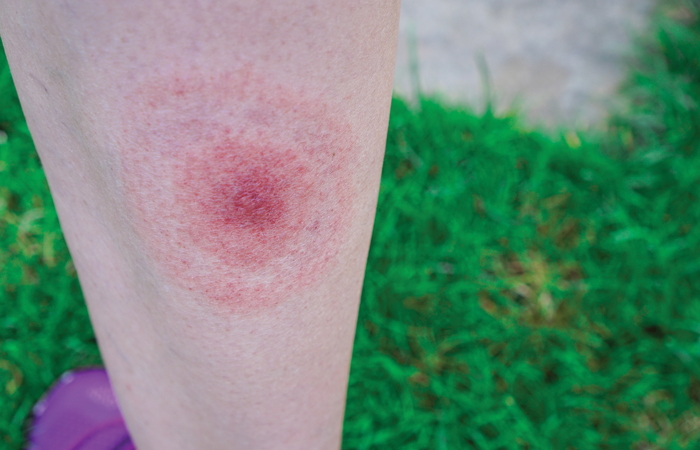
A circular or oval-shaped rash after a tick bite can be an early sign of Lyme disease. Customers should be treated immediately to avoid becoming seriously ill.
Sports injuries
From sprains and strains to muscle aches and pains, sports injuries frequently bring patients to the pharmacy.
One common mistake that leads to this is skipping the warm up, say physiotherapists and advocates for Deep Heat and Deep Freeze, Clara Kervyn and Elyn Marwick. Clara is also a musculoskeletal specialist, and Elyn is a personal trainer.
“Warming up is a hugely important part of any exercise routine in order to cut the risk of injury, improve performance and help with recovery,” explains Elyn.
So, what should a good warm up involve? Stretches alone will do little to protect against injury, she says.
“But dynamic movements which gently increase the heart rate and blood flow to muscles have been proven to improve performance and reduce the risk of injury by as much as 36 per cent. Advise leg swings, lunges, shoulder rolls and arm circles.”
“Remember, it’s not just a session in the gym that requires a warm-up,” adds Clara. “Anything that is more strenuous than usual puts muscles and joints at risk of injury, whether that is gardening, cycling or decorating.”
Cooling down is often even more neglected, she continues. “A five to ten minute cool down can make all the difference in preventing pain, aches and niggles, by reducing muscle stiffness and soreness and releasing any build-up of lactic acid.
Recovery is a big part of exercise. In fact, it’s just as important because if you aren’t recovering properly, how can you expect your body to keep up with the demands you place on it? Suggest static stretches and gentle movement such as walking to customers.”

Post-injury advice
If a customer presents with a muscle or joint injury, it’s important to find out when the pain or niggle began, says Clara. “If it has just happened, talk the patient through the PRICE technique – Protect, Rest, Ice, Compress and Elevate – but remember that it’s only appropriate for the first 72 hours after an injury.”
In this important time window, the cooling element of PRICE is scientifically proven to reduce blood flow to a particular area, which can help reduce swelling and soothe irritated muscles and joints.
There are cooling products available in the pharmacy which offer innovative topical solutions without the mess or hassle of ice.
“Once the initial swelling and inflammation has subsided, using warming products can help increase blood flow and help promote healing,” says Clara. “Heat therapy is also pill-free and a proven method of targeted, soothing relief.”
Customers can choose from a range of heat therapy product formats, including rubs, patches, warming belts and sprays, or use a hot water bottle.
“Sprains (torn or overstretched ligaments), strains (pulled or torn muscles or tendons) and tendonitis (inflammation or irritation of a tendon – the thick, fibrous cords that attach muscle to bone) are all incredibly common conditions,” continues Clara.
“Sprains and strains are primarily caused by sudden trauma or repetitive stress that forces a joint or muscle beyond its normal limits. Tendonitis is typically caused by repetitive strain, overuse or a sudden increase in physical activity.
It can occur in various parts of the body, with the shoulder, elbow, wrist, knee and heel being particularly susceptible.”
A varied exercise routine can reduce the risk of repetitive strain and ensure that supporting muscles, tendons and ligaments are strengthened, she adds.
“Aerobic exercises boost cardiovascular and mental health, stretching maintains flexibility, whilst strength training builds bone density and muscle mass.”
People should also listen to their body while working out, especially if they are new to exercise or a particular activity. “Pharmacy teams should be encouraging people to recognise their body’s limits and not push themselves too far, especially at first,” Clara advises.

Share:


In Conditions