


 1 Min
1 Min In Conditions

Follow this topic

Bookmark

Record learning outcomes
According to research published in the British Medical Journal (BMJ) last July, at home health testing kits continue to increase in popularity in the UK, as patients find it more difficult to access NHS healthcare.
These kits provide convenience, privacy and confidentiality, helping people to take charge of their health from the comfort of their own homes.
Gone are the days when pregnancy was the only thing people would routinely test for at home. Nowadays, there are kits that can test for a broad range of health conditions, lifestyle issues and symptoms – from menopause and vaginal or urine infections to prostate health, male infertility, stomach and bowel health, as well as vitamin deficiencies.
Although some home tests are sold through pharmacies only, others are also available from supermarkets, health and wellbeing stores and online retailers.
This means that many tests are being used without any support from a healthcare professional – reinforcing the importance of pharmacy sales alongside advice from the pharmacy team.
Not only do home testing kits need to be easy to use and easy to understand, but they also need to be safe, reliable and effective.
Pharmacy teams can help to make sure that customers know how (and whether) to use the tests, how to interpret the results, and what they should do next.
“Many tests are being used without any support from a healthcare professional”
Condition specific
Each home kit tests only for the specific symptom or condition listed on the packaging, so it is important that customers know exactly what they’re testing for and why.
Most are screening kits and cannot make diagnoses. This means they can be used to assess the risk of having a specific condition, but the user still needs to confirm the diagnosis with a healthcare professional afterwards.
With some home testing kits, the customer does everything themselves – taking the sample, doing the test and interpreting the results. These tests come with clear instructions, and most results are available at home within five to 20 minutes.
Other kits involve taking a sample at home and sending it to a lab in a pre-paid envelope. The results are then interpreted by a healthcare professional and either returned or available online within a few days.
Some home tests come with a QR code for customers to scan and access an online dashboard to see their test results plus personalised recommendations and advice.
There are also some free NHS self-sampling kits that people do at home, such as chlamydia or gonorrhoea tests (available to order online) and the FIT (faecal immunochemical test) kit distributed via the NHS bowel cancer screening programme.
This is currently being expanded to include everyone between the ages of 50 and 74, with eligible customers receiving a FIT test in the post. They take a stool sample themselves at home and send it in the post directly to the lab for testing. They will receive a letter with their results and next steps.
Instructions for use
Home tests involve taking a swab (e.g. from the nose, throat, mouth or vagina) or collecting a urine, stool, semen or blood sample.
Each kit comes with instructions on how to interpret the results, but customers may need to discuss these with a pharmacist or GP.
Different kits work in different ways, so it’s important that when supplying them, you advise customers to read the instructions carefully and come back to the pharmacy if they are unsure about anything.
The kit may have video links (usually accessed through a QR code) or a contact number and email address on the packaging if customers have any questions. Some tests need to be activated online or linked to a mobile phone app.
The instructions below cover some common home tests that customers may have questions about.
Blood tests
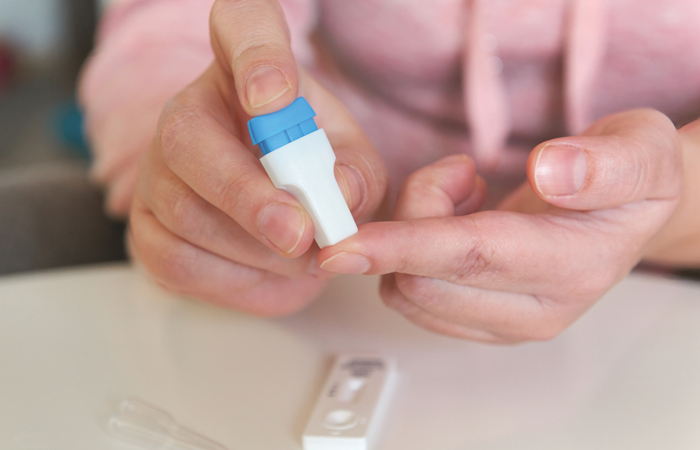
Fingerprick blood tests can be used to screen for a range of health problems, such as vitamin and mineral deficiencies (e.g. vitamin D or iron), cholesterol levels, prostate health and food intolerances. The tests analyse the blood for specific chemicals or markers.
To do a fingerprick blood test, customers usually need to follow these steps:
- Remove the lancet cap and throw it away
- Clean their finger with the provided alcohol pad or soap and water
- Use the sterile lancet to prick their fingertip – massage the finger downwards to release a drop of blood
- Collect the correct amount of blood with the capillary dropper (to the fill line)
- Squeeze the dropper bulb to release the blood onto a testing strip or into the sample (specimen) well on the test cassette. With some tests, they may need to add a chemical called a buffer to the blood. With other tests, the blood reacts to something already on the testing strip or in the sample well
- Wait for the coloured line to appear – they may need to read the results within a specific time frame (e.g. after 10 minutes but before 20 minutes)
- They may need to compare the coloured line to a provided colour chart.
You can reassure customers that their finger may bleed slightly and there may be some bruising, but this shouldn’t last very long.
The Community Pharmacy Blood Pressure Check Service
Community pharmacies in England can offer free blood pressure checks to eligible people over the age of 40 without an appointment – through the NHS Community Pharmacy Blood Pressure Check Service (Hypertension Case Finding).
High blood pressure increases the risk of heart attacks and strokes, but it doesn’t usually cause any symptoms. Therefore, it’s important that it is diagnosed early so that the person can receive the right treatment and avoid future complications.
If customers are not eligible for the free blood pressure service in the pharmacy, they may want to pay for a private test.
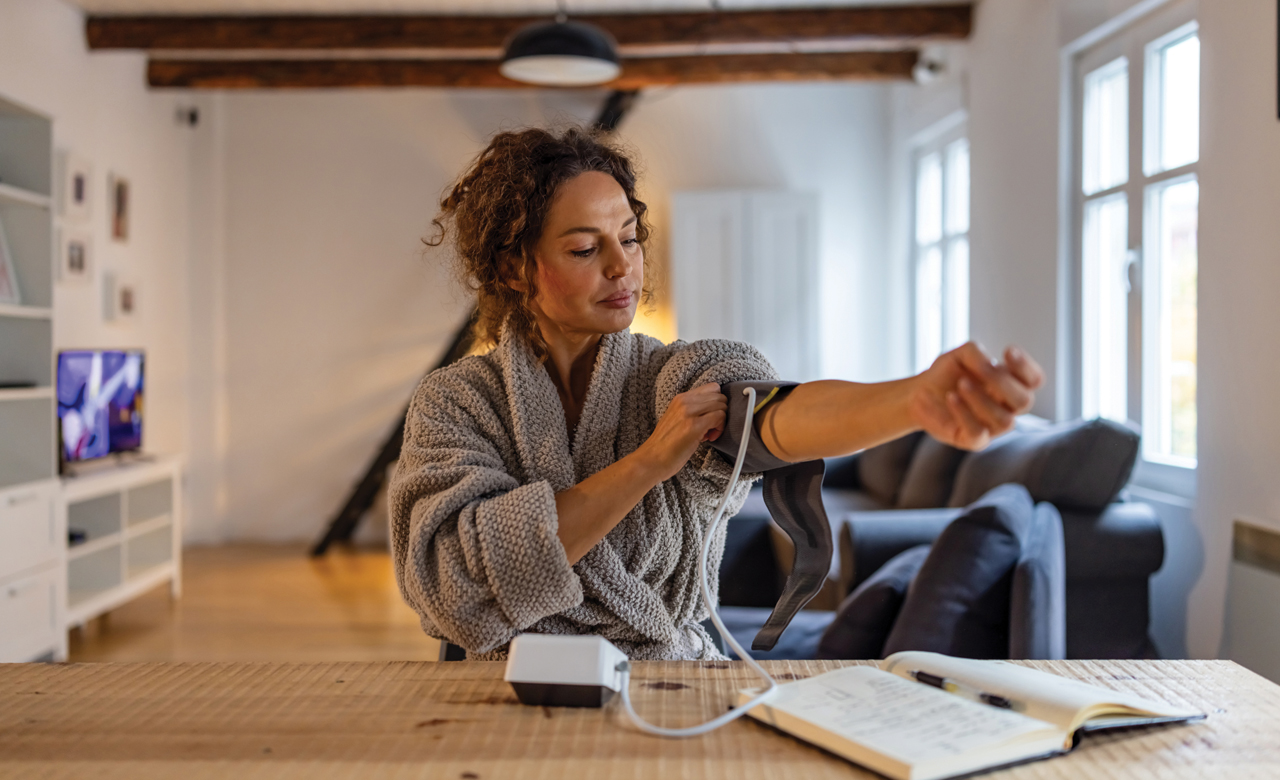
They may also want to buy a blood pressure monitor to use at home. Ideally, the device should measure blood pressure at their upper arm – or, if not, around their wrist. The cuff should be the right size for their arm; smaller and larger cuffs can be ordered in.
Most blood pressure monitors are straightforward to use and come with clear instructions. Customers can link them via Bluetooth to a monitoring app on their phone, which will help them keep track of their results, although writing down their readings in a diary works just as well.
It is important to check that any blood pressure monitoring device has been validated by the British and Irish Hypertension Society.
Monitors should also be serviced and calibrated by the manufacturer at least once every two years – although it may be cheaper and easier to buy a new one.
It’s also important to explain to customers how to understand their blood pressure results. The top number (systolic pressure) measures blood pressure when the heart beats. The bottom number (diastolic pressure) measures blood pressure when the heart rests between beats.
A “normal” blood pressure reading is typically below 120/80mmHg. Blood pressure is usually considered to be “high” if it’s 140/90mmHg or higher when checked by a healthcare professional, and 135/85mmHg or higher when checked at home.
However, blood pressure readings vary from person to person, at different times of the day (and night) and during/after different activities. If anyone is worried about their blood pressure, refer them to the pharmacist.
Stool sample tests
Stool sample tests can be used to screen for bowel and stomach problems by identifying specific markers of infections (e.g. H. pylori), inflammation or imbalances in the gut microbiome (such as bacteria or yeast levels).
Some kits test for hidden blood in stools, which can be caused by various conditions, from haemorrhoids to bowel cancer.
To take a stool sample, customers usually need to follow these instructions:
- Collect a small amount of stool (poo) on the collection paper, without letting the stool touch the toilet water
- Unscrew the cap of the sample bottle and remove the lid, which usually has a sample stick attached to it
- Insert the sample stick into the collected stool in at least three different places or scrape the stick end along the stool until all the grooves are covered. Only a small stool sample is usually needed
- Put the sample stick back into the sample bottle and tighten the cap
- Shake the sample bottle vigorously to mix the stool with the buffer solution
- Open the cap of the sample bottle and break off the tip of the dropper
- Turn the tube upside down and transfer the correct number of drops into the sample well
- Wait for the results – this is often a colour change.
Urine tests
Urine tests can be used to check for urinary tract infections (UTIs) by testing for bacteria and other markers, including white blood cells and nitrites.
UTI testing is also available through Pharmacy First, alongside treatment, if necessary.
To do a urine test, customers should generally:
- Collect a fresh sample of urine in a clean container (although some testing strips/sticks can be held directly in a stream of flowing urine)
- Remove the testing strip/stick from the sealed pouch
- Hold the absorbent tip in the collected urine sample for the time indicated on the packaging
- Place the test strip/stick on an absorbent material such as a paper towel to remove any extra urine
- Compare the colour change to the results chart after the waiting time specified by the instructions – there is usually a window for testing, after which the results won’t be accurate.
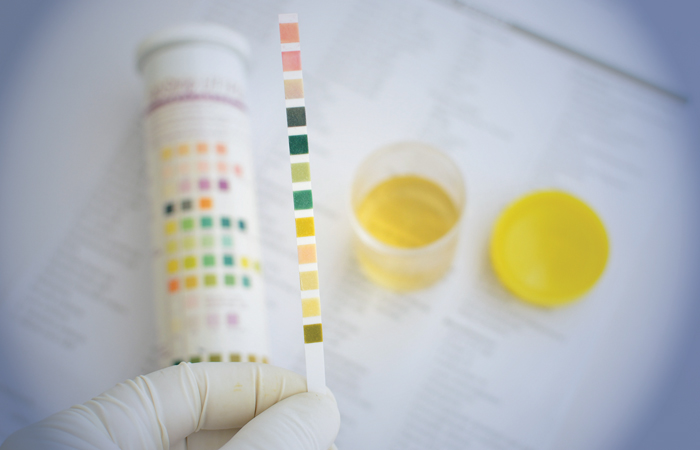
Customers can buy a UTI test kit to use at home, or they may prefer to use the Pharmacy First UTI service.
Vaginal tests
Vaginal swabs can be used to test for vaginal infections, such as thrush or bacterial vaginosis, or chlamydia.
A vaginal swab test will usually involve the following:
- Slide the swab no more than two inches into the vagina and rotate the swab for 10-15 seconds
- Carefully remove and place the swab in the test solution
- Add a few drops of the solution to the test cassette
- Check the results within the time specified.
Interpreting results
If a customer presents with a positive home test result, they should discuss this with the pharmacist. Depending
on what they are testing for, the pharmacist may be able to offer a suitable treatment.
Alternatively, they may be referred to their GP for additional tests to confirm (or rule out) a diagnosis.
If the test results are negative, customers may not need to do anything else. But if their symptoms persist or they’re worried about anything, they should be referred to the pharmacist.
Remember – many home testing kits can only be used for screening rather than a definite diagnosis.
While home tests sold through pharmacies should be accurate, testing errors can occur.
Customers may not have used enough blood, urine or stool sample, added enough buffer solution or interpreted the colour chart correctly. Some tests can be affected by certain medicines (e.g. H. pylori testing can be affected by taking proton pump inhibitors such as omeprazole, and antibiotics), while some vaginal testing kits should not be used too close to a menstrual period.
Wearables: pros and cons
These days, watches can do a lot more than simply tell the time. Smartwatches and health and fitness trackers can be used to monitor health data and record everyday activities such as exercise and sleep.
Some specialised wearable devices can even be used to monitor long-term health conditions (e.g. continuous glucose monitors for diabetes). However, wearables have their downsides, too.
Research has shown that activity trackers can encourage people to be more active, especially if they set daily or weekly targets. This can lead to a higher step count, increased weight loss and lower blood pressure.
However, people using these trackers tend to be active anyway – or they may stop using them within a year once the novelty wears off.
Some smartwatches have specific monitoring functions, for heart rate, irregular heart rhythms, blood oxygen levels and falls prevention.
Abnormal readings can help to assess the risk of specific health conditions or emergency situations. However, false alarms or over-monitoring may lead to unnecessary anxiety and stress (which are risk factors for heart disease) and more GP appointments, putting more pressure on the NHS.
Wearables tend to be expensive, which means the people who would benefit most (e.g. those on low income, who are at a higher risk of chronic health problems) can’t afford to buy them.
Many wearables are advertised as health and wellness products. Since they are classified as consumer devices, they are not regulated as medical devices and may not be tested vigorously enough for accuracy, reliability, effectiveness, safety and data security.
Continuous glucose monitors are MHRA-regulated medical devices that can be prescribed on the NHS for people with diagnosed diabetes.
However, these devices are also being bought by people who do not have diabetes to monitor their blood glucose, even though there is insufficient research to support such use.
Another potential downside is that wearables create and record sensitive health information, which is a concern for many people worried about their data security.
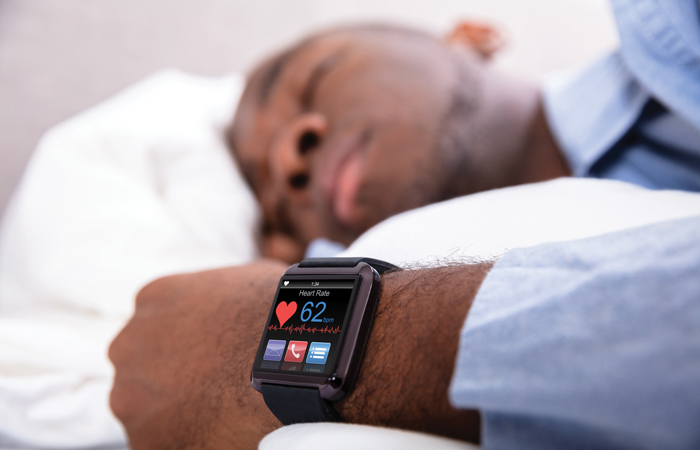
Wearables can encourage customers to get more steps in, or alert them to a lower– or higher – than usual heart rate.

Share:


In Conditions