Measuring lipid profiles
Measuring lipid profiles
Cholesterol is transported in the bloodstream attached to proteins known as lipoproteins. The two principal types are low-density lipoprotein (LDL) and high-density lipoprotein (HDL).
LDL cholesterol is often referred to as ‘bad’ cholesterol because it can accumulate within the arteries, causing them to narrow and harden (atherosclerosis) and reducing blood flow. This process can ultimately lead to a heart attack or stroke.
HDL cholesterol is commonly known as ‘good’ cholesterol because it carries excess cholesterol away from the arteries and back to the liver, where it is broken down and removed from the body. Maintaining healthy HDL cholesterol levels may help protect against heart attack and stroke.
A third component, triglycerides, also plays an important role in lipid health. Triglycerides are the body’s main form of stored fat and provide a source of energy.
Being overweight, consuming large amounts of fatty or sugary foods, poorly controlled diabetes, and excessive alcohol intake can all contribute to raised triglyceride levels.
Triglyceride levels may be elevated despite relatively normal cholesterol levels. A raised triglyceride level, combined with low HDL and high LDL cholesterol levels, can further increase cardiovascular risk.
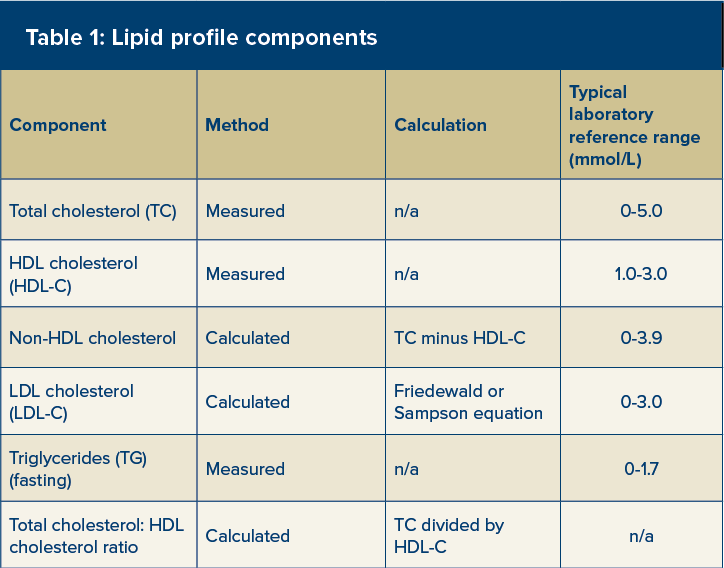
The usual method of assessing cholesterol levels is for the GP practice to send a non-fasting blood sample to the local pathology service, which provides a full lipid profile. The components of a lipid profile are shown in Table 1 (below), together with typical laboratory reference ranges.
Access to patients’ blood test results is not yet routinely available in community pharmacy. However, pharmacists can ask whether patients use the NHS App, through which they may be able to view their blood test results and share them during a consultation.
It is important that pharmacy teams are familiar with the NHS App, understand how blood test results are displayed, and know how to interpret the information presented.
An alternative to sending a blood sample to the pathology service is the use of validated point-of-care testing (POCT), which provides rapid results in a clinical setting.
This approach offers several advantages, including improved accessibility, the opportunity to discuss results during a single consultation, and earlier initiation and/or optimisation of treatment without the need for additional appointments.