


 3 Min
3 Min In Analysis

Follow this topic

Bookmark

Record learning outcomes
Every year, the World Happiness Report asks a simple question: how are we really doing? Published by the Wellbeing Research Centre at the University of Oxford, in partnership with Gallup and the UN Sustainable Development Solutions Network, the report draws on data from over 140 countries to produce a global picture of how people assess their own lives.
Rankings are based on a three-year average of each population’s assessment of their quality of life, with experts accounting for variations using factors such as GDP per capita, healthy life expectancy, having someone to count on, sense of freedom, generosity and perceptions of corruption.
The recently published 2026 report shows a clear pattern that the happiest societies are not necessarily the wealthiest; they are the ones with the strongest foundations of trust and mutual support. Finland has topped the rankings for the ninth consecutive year, followed by Iceland and Denmark – countries consistently associated with high social cohesion, robust public services and strong community ties.
For the UK, the findings make for sobering reading. This is the second year in a row that no English-speaking country appears in the top 10, with the UK placed 29th – below Ireland (13th), Australia (15th) and Canada (25th).
So, what does the report reveal about where we can do better?
Happiness and social media
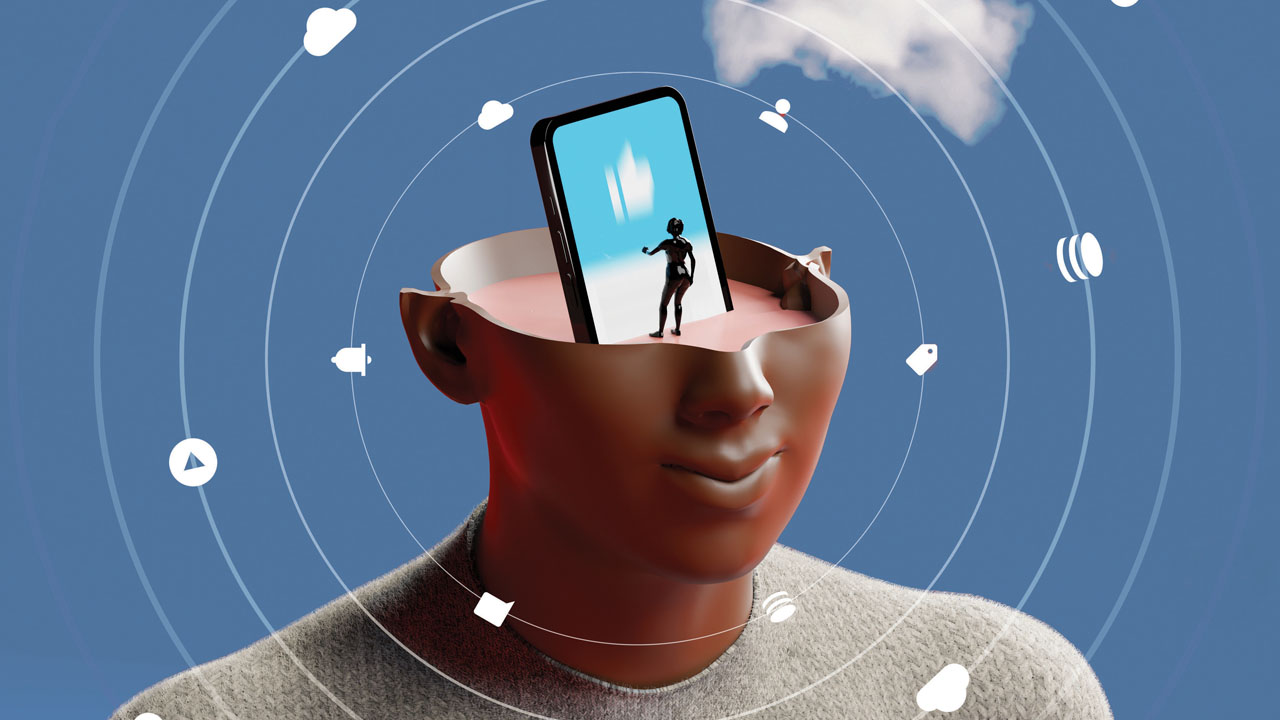
In North America and Western Europe, young people are much less happy than they were 15 years ago, according to the report. Over the same period, social media use has greatly increased. But while it is easy to blame social media for this fall in happiness, is this really the cause?
The PISA (Programme for International Student Assessment) study by the Organisation for Economic Co-operation and Development of 15-year-olds in 47 countries shows that those who use social media for more than seven hours a day have much lower wellbeing than those who use it for less than one hour.
Furthermore, in a sample of US college students, most said they wished social media platforms did not exist, and they only use them because others are using them, but they would prefer it if no one did.
Internet activities fall into two groups. The first is communications, news, learning and content creation. These are associated with higher life satisfaction. The second group – social media, gaming and browsing for fun – are associated with lower life evaluations.
All internet activities are associated with lower life satisfaction at very high rates of use, especially for girls and for those in the UK and Ireland.
The PISA study also found that among girls in most regions, non-users of social media were the most likely to report complete satisfaction with their lives. Having said this, in some regions, heavy users were also more likely to report complete satisfaction than moderate users.
The report asks whether social media is “reasonably safe for children and adolescents”, and its findings show there is overwhelming evidence of severe and widespread direct harms such as sextortion and cyberbullying, and compelling evidence of troubling indirect harms such as depression and anxiety.
Furthermore, it warns that “the harms and risks to individual users are so diverse and vast in scope that they justify the view that social media is causing harm at a population level”.
Trust and social connections
Previous studies from the World Happiness Report have highlighted the importance of trust and social connections for wellbeing, with the latest report examining how the rise of the internet and social media has affected wellbeing both directly and indirectly, by altering trust, social connections and emotional bonds.
The 2026 report found that the relationship between internet use and wellbeing varies sharply across generations, genders, and regions. It is strongly negative for Gen Z (people born between 1997 and 2012), moderately negative for Millennials (born 1981-1996), near zero for Gen X (1965-1980), and slightly positive for Baby Boomers (1946-1964).
At the same time, the report shows that the social and emotional foundations of wellbeing have deteriorated most for younger Europeans, especially in Western Europe.
Declines in interpersonal trust, institutional trust, perceived social activity and social meeting frequency are largest for Gen Z and Millennial women.
Older cohorts show more resilience, supported by rising attachment to country and, in many Central and Eastern European countries, improved feelings of safety.
“The rise of the internet and social media use has affected wellbeing by altering trust, social connections and emotional bonds”
The antithesis of trust?
So, why does social media seem to be the antithesis of strong trust and support systems?
Dr Katherine Hall, assistant professor (teaching) in Psychology (Child Development and Education) at Coventry University, believes the answer is not as straightforward as we
may think.
“This is a tricky one as social media, whilst coming with risks, can be hugely beneficial in terms of social communication and networking,” she says.
“Research shows that young people aren’t communicating poorly; they are just communicating differently.
We also know that social media can be a unique platform to help others connect with like-minded individuals and communities that they may not have access to in their immediate locality.
“We also have something we call the ‘online disinhibition effect’, which shows that people actually tend to disclose more when communicating online.
Whilst this can potentially have negative implications – such as ‘cyberbullying’ (saying hurtful things you might not say in person) – it also means that sometimes people develop very strong and even deeper bonds with individuals virtually as they disclose more than they might feel able to in face-to-face settings.
So, I don’t think we should frame social media as the antithesis of strong trust and support systems, but we obviously do need to acknowledge the potential risks it brings.”
Positive impacts
The report acknowledges that “translating scientific evidence into effective policies for health and technology requires care”, and it is important to bear in mind that there are, of course, potential positive impacts of screen time.
“We’ve already talked about how social media can provide a space for community and connection that individuals may find hard to find in person, and this is particularly true for minority groups or special interests,” says Dr Hall.
"It can also be very beneficial for learning and SEND [Special Educational Needs and Disabilities] in particular. We know children with ADHD, for example, tend to gravitate more toward screens, but we can then utilise this to help teach educational games.
“Reading can also be more fluent on e-readers for children with dyslexia as the screens can be adapted to mimic coloured overlays or to increase font size, etc, so there are lots of positive benefits.
“Ultimately, we also know that our shared understanding as a species relies on digital communication, so screen use overall cannot be a
bad thing.
“The take home message really is that screens and tech itself are not inherently bad, but they can replace very good things like oral language communication, which is important for developing cognition.”
Government limitations
The Government recently published guidance on screen time usage, defined by age and usage type.
This recommends that under-twos avoid using screens completely, unless for shared communication like videos calls, and that under-fives limit screen time to one hour a day, with screens removed from mealtimes and before bed.
While this is helpful guidance, Dr Hall says it still leaves a lot of unanswered questions for parents and carers. “One clear gap is the type of screen time,” she says.
“As researchers, we know that not all screen time is equivalent. Using social media on a phone, for example, is very different to watching a movie on a TV or using a PC for homework versus a tablet for gaming.
“These different types of screen uses are hard to quantify and come with different risks and benefits, but the Government guidance gives limited advice on this.
It did go as far as to say that quality screen time should be prioritised – such as using educational or slow-paced videos – and this is based on research which shows that fast-paced video content can have a negative impact on executive functioning and emotional regulation.
But, again, it would have been better if the Government advice had explained this to parents and carers.”
What can pharmacy do?
Although it’s a complicated topic, there is some advice pharmacy teams can offer people who may have concerns about the effects of screen time. The Mental Health Foundation suggests this list of things to try:
- Turn off ‘push’ notifications and instant alerts for social media or news apps for a break from anxiety-provoking information
- Use a watch or an alarm clock to keep phones out of the bedroom and help resist the urge to ‘doomscroll’ in bed
- Manage social media feeds by blocking or hiding certain profiles to limit exposure to negative content
- Set a time limit on scrolling that gives a signal that it’s time to put the phone down
- Balance the negative with a positive. Mindfulness, reading, spending time with others and exercising are all self-care activities that can benefit wellbeing.
In addition, Dr Hall says that for customers mentioning addiction to their phones, pharmacy staff can signpost to community support groups, as well as charities and programmes that aim to reduce or reframe screen usage.
As with so many things in life, the answer lies in getting the balance right.

Finland consistently tops the world happiness rankings, thanks to its strong foundations of trust and mutual support for the people who live there.

Share:


In Analysis