Assessing symptoms
Assessing symptoms
Effective management begins with exploring:
- Onset and duration of symptoms
- Whether one or both eyes are affected
- The nature of any discharge
- The presence and severity of itching.
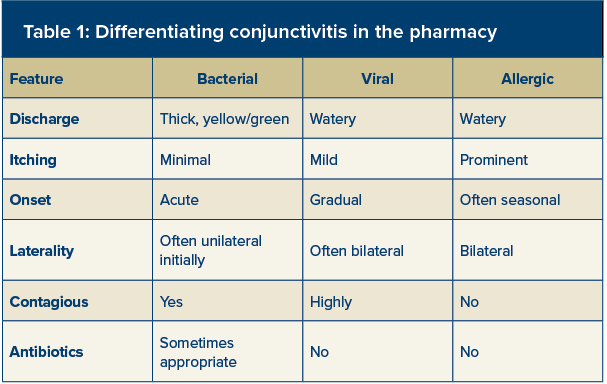
Symptoms that initially affect one eye more than the other point to an infective cause, as both bacterial and viral conjunctivitis commonly begin unilaterally before spreading.
Purulent discharge with eyelids stuck together on waking suggests bacterial infection, whereas watery discharge and a gritty or burning sensation are more typical of viral disease.
Where itching dominates, particularly if symptoms are bilateral or seasonal, allergic conjunctivitis should be strongly considered.
Recent upper respiratory tract infection or contact with others with conjunctivitis may support an infective cause, while a personal or family history of atopy (e.g. asthma, eczema or hayfever) increases the likelihood of allergy.
Asking whether symptoms are improving, static or worsening also helps to guide advice and follow-up.
Itching is one of the most helpful distinguishing features. Prominent itching strongly suggests allergic conjunctivitis and should prompt consideration of antihistamine or mast-cell stabilising treatments rather than antibiotics.