6 Min
6 Min

In OTC training

Bookmark
Learning objectives
After studying this module, assistants will:
- Understand the basic structure of joints
- Be familiar with the different causes of joint and muscle pain
- Be confident providing self-care, preventative and OTC treatment advice.
A joint is a point where two bones connect. However, at most sites in the body, bones are not directly joined.
If they were, it would provide the structural support that is a fundamental function of the skeleton, but it would not allow for movement. Instead, the bones in most of our joints are held in close proximity by tendons, ligaments, cartilage and muscles.
Joint movement is facilitated by cartilage, a smooth connective tissue that covers the ends of the bones.
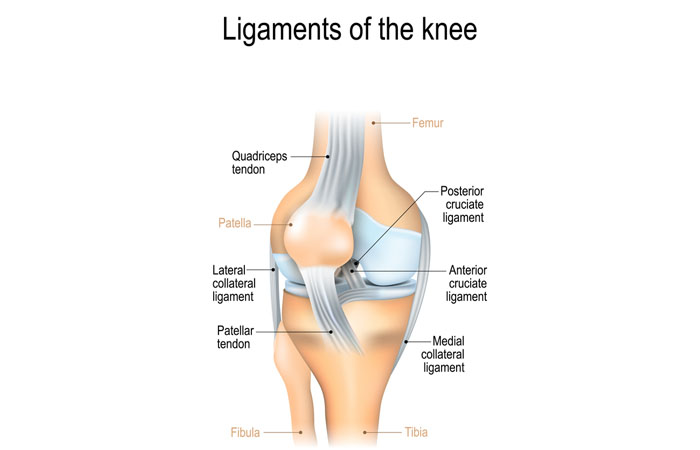
Some joints – those that allow the widest range of movement, such as the knees (as pictured) and wrists – also contain synovial fluid, which provides extra lubrication and acts as a shock absorber.
Bones move when the attached muscles contract. Skeletal muscles can only pull in one direction, so usually exist in pairs.
For example, contracting the bicep muscle in the upper arm allows the lower arm to flex towards the upper arm, and contracting the opposing triceps muscle allows it to move away again.
Tendons are tough bands of connective tissue that attach muscles to bones, while ligaments, which are similar in structure, hold bones together – in some cases restricting movement in order to protect a joint.