


 Risks and benefits
Risks and benefits
There is no smoker who won’t benefit from kicking their habit. Stopping smoking lowers the risk of developing smoking-related health problems and slows the deterioration of issues that have already arisen, improving quality of life as a consequence. The health of family and friends will also improve as a result of not being exposed to second-hand smoke, and the financial savings can be considerable.
Providing support, alongside appropriate medications and self-care advice, can really improve a customer’s chances of quitting.

Did you know?
There is no such thing as it being ‘too late’ to quit smoking. The benefits of quitting start the day a person stops.
Nicotine replacement therapy
Nicotine replacement therapy (NRT) contains nicotine, but at a much lower level and without all the other harmful chemicals that are present in tobacco smoke, such as carbon monoxide and tar.
NRT helps to control cravings and reduces withdrawal symptoms, which can include moodiness, irritability and difficulty concentrating.
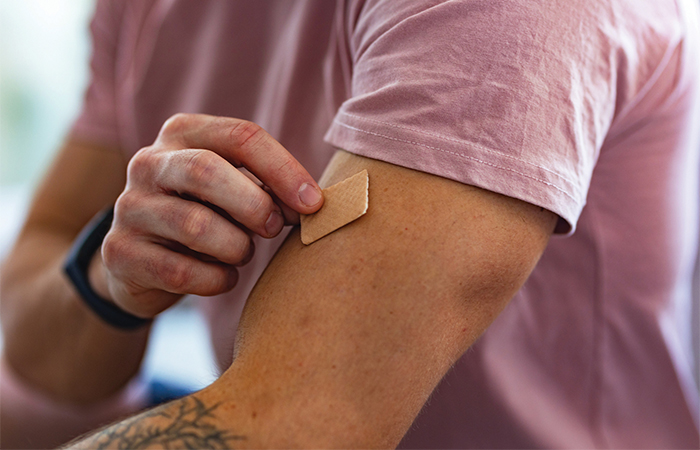
There are lots of different options available, including patches, gum, microtabs, lozenges, inhalators and sprays for the mouth or nose. There is no evidence that any one form is more effective than another, so it really comes down to personal preference.
Someone who thinks they might miss the hand-to-mouth action of smoking might do well with a cigarette-like inhalator device, whereas patches that can be put on and left in place for the rest of the day might be better for someone who works in an environment where it is difficult to take breaks. Combining products can also be helpful for some people – particularly very heavy smokers. For instance, a patch can be worn for a gradual dose of nicotine over the day and a spray can provide rapid craving relief when required.
In all cases, the aim would be to reduce the dose of NRT after eight to 12 weeks and then stop altogether. If the person is unable to stop, it is better for them to continue on NRT for as long as they need it, rather than to go back to smoking.
POM products
Pharmacies may be able to supply Champix (varenicline) or Zyban (bupropion) if there is a patient group direct (PGD) in place to support a smoking cessation service. Ask your pharmacist if this is available in your pharmacy.
E-cigarettes
Vapes or e-cigarettes simulate cigarette smoking. Some contain nicotine and have been shown to help some people successfully quit cigarette smoking.
E-cigarettes are not completely risk free, but the NHS says they are far less harmful than cigarettes. They do not produce tar or carbon monoxide, although they do contain potentially harmful chemicals, albeit at lower levels than in cigarette smoke.
The National Institute for Health and Care (NICE) recommends that if a person wishes to use e-cigarettes, they should be advised to use a licenced stop smoking medicine instead. If they prefer to use e-cigarettes, they should be given information about these, support, and offered referral to the local stop smoking service.
By law, e-cigarettes must not be supplied to people under the age of 18. If customers ask about e-cigarettes, explain the options available and refer to the pharmacist, if required.
Self-care tips
Suggest the following tips to help smokers succeed in their quit attempts:
- Set a quit date and stick to it
- Make a plan that includes how to handle situations where temptations lie
- List reasons for quitting and keep them handy for when extra encouragement is needed
- Identify when cravings are likely to occur and have some strategies in place to cope with them
- Get rid of all smoking reminders, such as ashtrays and lighters
- Plan what to do with the time and money freed up by stopping smoking
- Get support from friends, family members and stop smoking advisors.
Signposting
For more information, you can:
- Use your Counter Intelligence Plus training guide
- NHS Better Health: nhs.uk/better-health/quit-smoking
- Public Health Scotland: https://publichealthscotland.scot/publications/
how-to-stop-smoking-and-stay-stopped/ - Action on Smoking and Health (ASH): ash.org.uk
- British Lung Foundation: blf.org.uk/support-for-you/smoking