

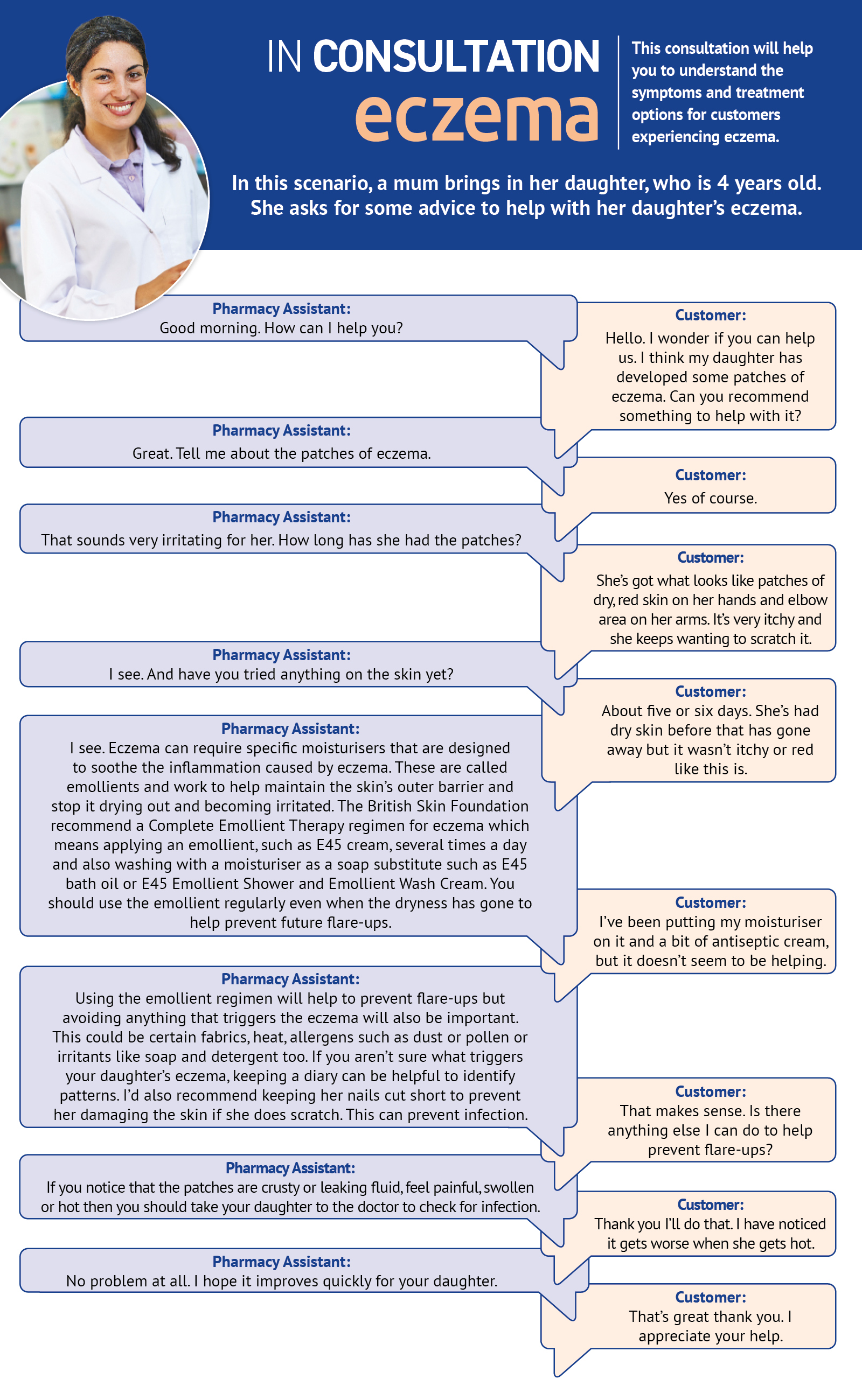
Eczema is an inflammatory skin condition characterised by dry, itchy skin. Most people experience dry skin at some point during their life when the skin is dehydrated but dry skin is different to eczema.
Eczema is thought to affect between 10-30% of children and 2-10% of adults.1 It often presents before the age of 5, although can present in adulthood.2 There is a strong family link for eczema and people with hayfever or asthma are more likely to experience eczema.3
Symptoms of eczema typically include dry, cracked, itchy skin. It can make the skin thicker or scaly in appearance and can be different in colour to the skin around it. This can be lighter, darker, red or purple in appearance. Eczema typically affects the flexor joints and hands but can be present on other areas of the body.3
Symptoms of eczema can vary over time with flare-ups occurring when symptoms worsen, often triggered by coming into contact with an allergen or irritant. Changes in temperature, stress, hormonal changes or skin infections can also trigger flareups.3
Scratching itchy skin further irritates the skin and exacerbates the itch leading to a vicious circle known as the ‘itch-scratch cycle’. Broken skin can allow irritants and allergens to enter the skin more easy causing further irritation allowing infections.4
Management of eczema and other dry skin conditions centres on the use of moisturisers (emollients) to help the outer layer of skin function as a barrier. The Complete Emollient Therapy (CET) regimen is recommended by the British Skin Foundation as ‘the most important treatment for all patients with eczema’.5 The CET regimen involves regular application of an emollient and washing with a moisturiser instead of a soap.5 Emollients should be applied to skin several times each day. More frequent application is encouraged, the drier the skin is. There are many different types of emollients available and finding one that suits the individual both in terms of effectiveness and patient preference is important so that the emollient is used regularly. This aligns with NICE guidance, recommending frequent emollient application and using a moisturiser as a soap substitute.8
Try to keep skin cool because heat can worsen itching. Nails should be kept short to prevent the skin being broken from scratching and prevent infection. Where possible, 100% cotton clothing should be worn to prevent overheating. Allergens and irritants should be avoided to prevent flare-ups. Keeping a diary of symptoms can help to identify patterns of when flare-ups occur and identify triggers. These can then be avoided by the patient.
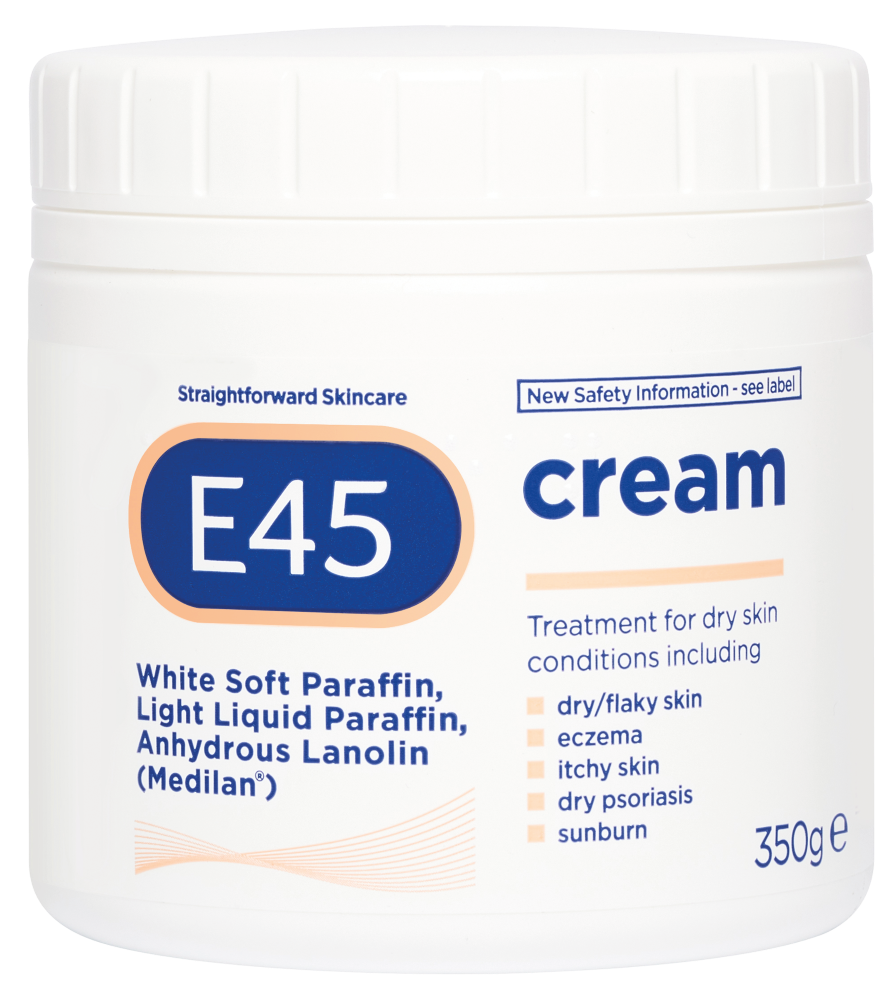
Medilan® is a highly purified hypoallergenic grade of lanolin. Medilan® shares many properties with human skin – it is a ‘biomimetic’ with at least twice its weight of water that helps trap in moisture, acting as a moisture reservoir to gently soothe skin.6
The E45 range allows patients to use a variety of products to design and fit into their CET regimen. E45 cream can be used as part of a CET regimen alongside E45 Bath Oil, E45 Emollient Shower and Emollient Wash Cream as a soap substitute.
In a study looking at the effects on atopic eczema of adopting a CET regimen, using a combination that included E45 Cream and E45 Emollient Bath Oil, overall improvement was noted in 87% of patients and mean skin dryness score fell significantly between Day 0 and 28 (p<0.0001).7
All products in the E45 cleansing range are clinically proven and dermatologically tested and are designed for every day use.
The E45 range contains options for all elements of the CET regimen: daily emollient (E45 Cream) or moisturiser (E45 Lotion), supported by E45 Emollient Bath Oil, specific anti-itch preparations in Cream, Gel and Coolmousse formats, and E45 Emollient Wash Cream and E45 Emollient Shower Cream products suitable for people with dry, sensitive or atopic-prone skin.
References:


