


 15 Min
In OTC training

Bookmark
Learning objectives
- Know the organs that make up the upper gastrointestinal (GI) tract
- Understand the symptoms of various upper GI tract conditions
- Be confident recommending treatment options for common GI conditions
- Know when to refer to the pharmacist.
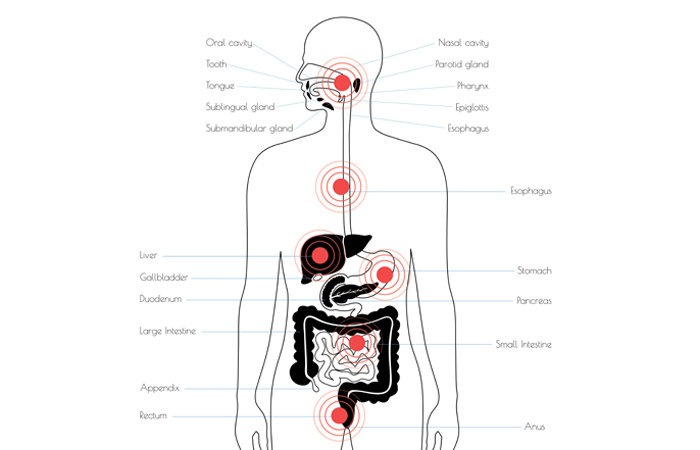
The gastrointestinal (GI) tract is a tube of muscle that manages the path that food takes through the body. The upper GI tract starts at the mouth and includes the stomach, the oesophagus and the first part of the small intestine (duodenum). The lower GI tract continues from here down to the anus.
Digestion starts the moment food is eaten, with the mechanical action of chewing. At the same time, salivary glands in the mouth release saliva, which contains an enzyme called salivary amylase. This helps to break down starch in a process known as chemical digestion.
After swallowing, food passes into the oesophagus and travels downwards, aided by waves of muscular contractions called peristalsis.
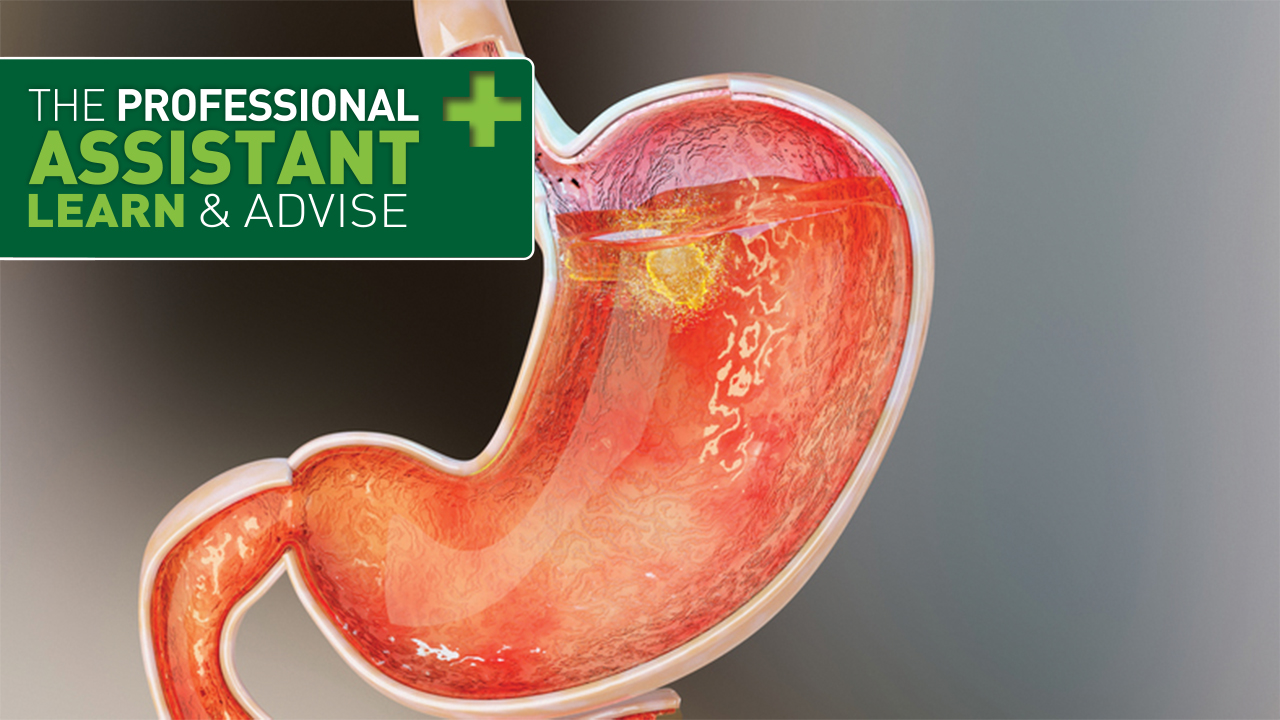
At the end of the oesophagus is a ring of muscle called the lower oesophageal sphincter. This marks the opening to the stomach. In the stomach, food continues to be broken down by gastric juices, the main components of which are acid and the enzyme pepsin. Mucus is produced to protect the lining of the stomach.
After one to two hours, the food that has been eaten has been turned into a thick liquid called chyme. The pyloric valve of the stomach opens and allows the chyme into the duodenum, where it mixes with more digestive enzymes, this time from the pancreas, and bile made by the liver.
This mixture passes into the small intestine, from where most of the nutrients are absorbed into the body.
Did you know?
The feeling of being uncomfortably full long after eating is a symptom of indigestion.