



 1 Min
1 Min In Conditions

Follow this topic

Bookmark

Record learning outcomes
In 2020, NHS England began to lay the foundations for achieving its goal of becoming the first net zero health service in the world by 2045 – a target that is now less than 20 years away.
Wales and Scotland followed suit in announcing targets to reduce their carbon footprints, with Scotland aiming for net zero by 2045, and Wales committing to a 34 per cent reduction by 2030.
The pharmaceutical industry has room for growth when it comes to decreasing its carbon footprint, reducing waste and raising awareness of preventative health.
To pave the way for this growth, the Royal Pharmaceutical Society (RPS) has produced a Greener Pharmacy Guide and Toolkit to help pharmacies implement changes with measurable outcomes, with three levels of accreditations (bronze, silver and gold).
The guide covers six domains: people, clinical practice, travel, resource use, ICT, and operations and strategy. It can be read in-depth online at bit.ly/49cUlkd, but for now, a few of its key messages are fleshed out below.
Prevention over treatment
Guiding customers towards preventative healthcare is one of the most sustainable things healthcare professionals can do. It can mean decreased use of medicines, less chance of medicines waste and improper disposal of medicines, lower use of medical devices and a lesser likelihood of people needing long-term care – to name just a few benefits.
The Greener Pharmacy Guide notes that providing holistic advice to patients – “guiding them towards evidence based, non-pharmacological treatments where clinically appropriate and directing them to relevant health and social care providers or support groups when appropriate” – has various environmental benefits.
This type of care “reduces overprescribing where appropriate, and utilising prevention and health promotion programmes helps support a healthy population, reduces care needs and improves health outcomes – which moderates demand on healthcare services”, the guide says.
Making an effort to reduce health inequalities through awareness campaigns is another aspect of sustainability that pharmacy teams can work towards.
This echoes the sentiments of prevention over treatment and can be as simple as knowing what local services can provide the specialised help a customer needs.
The more you know
The earlier customers can identify symptoms or you can spot a red flag, the sooner the person will be able to get help, and hopefully, the shorter their recovery period will be.
This also puts less strain on the healthcare system and resources, including healthcare professionals’ time, transport, and medicines and their packaging.
“Community pharmacies are uniquely placed in the heart of communities to proactively support and promote behaviour change and improve the health and wellbeing of the public,” says the RPS guide.
“Staff should be well-equipped to understand public health needs, spread health and wellbeing ethos, and communicate appropriate health and wellbeing information to patients and public.”
This includes making customers aware of preventative and wellbeing services like the Smoking Cessation Service, the Hypertension Case-Finding Service, and vaccination services like Covid-19, flu and travel vaccinations.
“Pharmacies too have a responsibility to protect the planet”
Reviewing repeats
There is huge scope to reduce overprescribing and medicines waste. The Greener Pharmacy Guide recommends that teams tackle this by explaining to customers how things like repeat dispensing systems work, including the importance of only requesting items that are required.
It suggests that a patient requesting repeats is only provided with their medicines if the supervising pharmacist is satisfied that:
- The patient is taking or using, and is likely to continue to take or use, the medicine appropriately
- They are not suffering from any side effects that indicate the need or desirability of reviewing the treatment
- The medication regimen has not altered in a way that indicates the need or desirability of reviewing the treatment
- There have been no changes to the health of the patient to whom the prescription relates that indicate the need or desirability of reviewing the patient’s treatment.
Implementing these checks not only encourages customers to be aware of their medicine regime and how their health or condition may be changing, but it potentially saves hordes of medicines from expiring in people’s cabinets, being consumed unnecessarily, or thrown away.
If it is established that a customer no longer needs medication that they already have at home, remind them that they should be returned to the pharmacy for proper disposal.

When medicine expires, it should be returned to the pharmacy for proper disposal.
“Consistent touchpoints raise awareness and help reduce unnecessary waste”
A super success
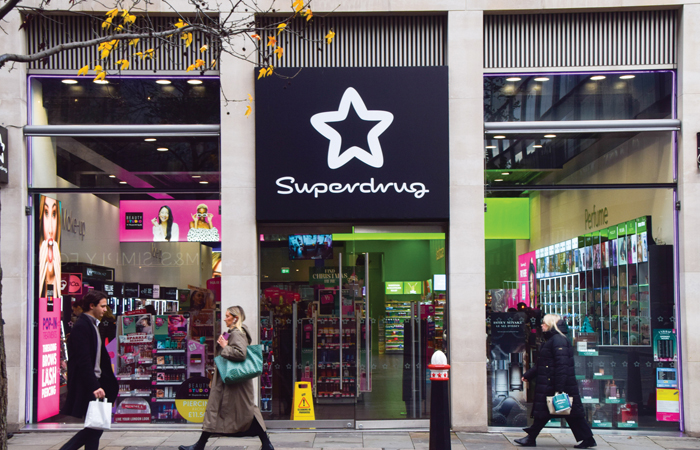
Superdrug implemented the Greener Pharmacy Toolkit in 2025, and has already seen great success. “We’re supporting sustainable pharmacy practices while ensuring patient-centred and cost-effective service delivery, through utilisation of the Greener Pharmacy guide,” says Superdrug pharmacy superintendent Niamh McMillan.
The goals of the RPS guide align with one of Superdrug’s core strategic pillars, ‘Doing Good Feels Super’. “At present, the company recycles about 80 per cent of its operational waste through its distribution centres and has sent no waste to landfill since 2013,” says Niamh.
Getting on board with the recycling initiatives available is a huge way to put the principles of the Greener Pharmacy Guide into practice.
By the end of October 2025, for instance, Superdrug had collected and recycled approximately 285 tonnes of blister packs, or an estimated 142.5 million units.
All Superdrug pharmacies have now received Greener Pharmacy bronze accreditation. “This entails the pharmacy promoting medicines waste reduction through routine staff-patient conversations, visible posters and leaflets, and reminder messages on labels and bags. These consistent touchpoints raise awareness and help reduce unnecessary waste,” says Niamh.
“Day-to-day operations have been strengthened by enhancing existing practices, appointing a sustainability lead, adopting simple yet effective measures such as reducing waste and promoting active travel, integrating sustainability into pharmacy policies.”
The company has also been working hard to reduce its energy consumption, for example, by introducing LED lighting.
“However, a standout benefit has been the comprehensive staff training,” Niamh adds. “Team members now have a firmer grasp of public health and the social factors affecting wellbeing, giving them the confidence to engage more meaningfully with customers on health-related topics.
As the backbone of our community that protects the health and wellbeing of patients, pharmacies too have a responsibility to protect the planet and the opportunity to lead in sustainable practices. The Greener Pharmacy Toolkit is a clear example of how Superdrug puts these principles into action, for the benefit of people, communities, and the planet.”
Inhaler impact
Inhalers are life-saving devices which help thousands of people manage their asthma daily. However, when used incorrectly, or when not disposed of properly, they can contribute hugely to the pharmaceutical and health industry’s carbon footprint.
To educate people on this and outline proper use, the National Institute for Health and Care Excellence (NICE) updated their decision aid, Asthma Inhalers and Climate Change.
The guide is aimed at customers, but pharmacy teams can use it for their education, too, or keep it on hand to share with customers coming in with inhaler prescriptions.
“Inhalers are a key part of treating your asthma. The most important thing is that your asthma is kept as well controlled as possible, using inhalers that suit you well. Some types of inhaler have a bigger carbon footprint than others. That is, they have a bigger effect on climate change (global warming). Everyone has a carbon footprint,” says the aid.
“If you would like to think about reducing the carbon footprint of your asthma treatment, this decision aid explains the options. It is intended to help discussions between people aged 12 and over and their healthcare professionals.”
It implores readers not to stop using their current inhalers before discussing with their healthcare professional, reiterating that if customers stop their treatment, their health may be compromised and their carbon footprint could end up higher, as they will need to use their reliver (rescue) inhaler or they may need more visits to the GP or hospital.
Control the controllables
The first point in the decision aid may seem redundant, but could be the most effective. “Try to get your asthma under the best control you can,” it says.
“You’ll feel better and use fewer doses of your reliever (rescue) inhaler, so the carbon footprint of your treatment will be less. If you need to use your reliever (rescue) inhaler more than twice a week your asthma may not be well controlled. Uncontrolled asthma has a higher carbon footprint than well-controlled asthma. Talk to your healthcare professional about your personal asthma action plan and use your inhalers as prescribed.”
Secondly, asthmatic customers should often check if they are using their inhalers properly, even if they have been using them for years. Using the correct technique means less medicine is wasted, so ensure both first-time inhaler and regular inhaler users are using the right technique.
“Not everybody does this [uses their inhalers properly], even if they think they do. A spacer can also help [customers] get the most out of [their] metered dose inhaler.”
The right inhaler
“Most people with asthma have one or more preventer inhalers (which control your asthma) and a reliever or rescue inhaler (usually blue), which relieves symptoms. Some types of inhalers contain a propellant (gas) to carry the medicine into the lungs. The propellant has a greenhouse gas effect, which contributes to climate change (global warming). Other types of inhaler do not contain propellants,” says the aid.
Some customers may want to consider dry powder inhalers – a type of inhaler that does not contain a propellant. Again, this decision should be carefully considered and discussed at the customers next routine asthma appointment.
“The most important thing is to keep your asthma under the best control possible, using inhalers that suit you well. This will also help reduce the carbon footprint of your treatment. The aim is that you have no or minimal asthma symptoms, and you should not need to use your reliever (rescue) inhaler more than twice a week,” says the aid.
“If dry powder inhalers are not suitable for you, it is better for you and the environment to use metered dose inhalers to keep your asthma under the best control possible.”
Inhaler disposal is another way for asthmatic customers to reduce their impact on the environment, and should take their inhaler to the pharmacy for correct disposal, or even better, to be recycled.
“Even when there is no medicine left, metered dose inhalers and breath-actuated inhalers still contain propellant (gas). If you just throw them away or put them in home recycling, this will leak out over time,” says the aid.
“Some pharmacies have access to recycling schemes. If your inhalers cannot be recycled, they can be incinerated (burned) in medicines waste collected from the pharmacy. This will destroy the propellant (gas).”
Other ways to reduce the inhaler impact includes avoiding building up a big stock of inhalers that could go to waste if left unused. It is important that customers do not run out of inhalers, and have enough with them, especially if they are travelling.
However, having a ‘stock’ of inhalers can lead to many of them expiring and going to waste. Encourage customers receiving inhalers to check how many they have at home, and if it is many, they should discuss this build-up with the pharmacist or GP.
Another important way to reduce the amount of gas released is by using the right strength inhaler. “You might be able to use fewer puffs to get the same dose of medicine. This will avoid using extra propellant (gas).”

Share:


In Conditions