



 5 Min
5 Min In Conditions

Follow this topic

Bookmark

Record learning outcomes
Nasal problems affect most people from time to time. A blocked nose or catarrh isn’t usually a sign of anything serious and can often be eased with self-help measures and pharmacy medicines. However, some long-term (chronic) symptoms, such as nasal polyps or sinusitis, may need to be treated with prescribed medicines or even surgery. Since pharmacy teams are often asked to advise on nasal symptoms, it’s important to know when to suggest suitable over-the-counter treatments and when to refer customers to the pharmacist.
Nasal congestion
Nasal congestion (a blocked or stuffy nose) is usually due to inflammation inside the nose and may be accompanied by other symptoms, such as a runny nose and sneezing. Congestion may last for just a few days, but it can also become a chronic problem. Persistent nasal congestion can lead to catarrh, cough, a loss of smell and taste, and crusting inside the nose, which may bleed.
The most common causes of nasal congestion are viruses like colds, flu or Covid, allergies such as hayfever or house dust mite allergy, nasal polyps or sinus problems. Very occasionally, a blocked nose is due to a structural problem, swollen adenoid glands, an injury, something stuck inside the nose, side-effects of certain medicines or a tumour.
A mild or occasional blocked nose often clears up on its own. If congestion is bothering the customer, they can try an OTC product to ease their symptoms. For instance, they may like to try:
- Salt water (saline) drops, sprays or rinses to wash away thick, sticky mucus inside the nose, especially in babies and young children
- Vapours, rubs or pastilles (often containing menthol or eucalyptus oil) can be added to hot water for steam inhalation or rubbed directly onto the chest. Sucking the pastilles may help to soothe a sore throat too
- Medicated decongestant drops and sprays are generally suitable for adults and children aged six years and older, but it’s important that customers check the labels for usage restrictions. These products should not be used for longer than five days in children aged six to 11 and five to seven days in adults and over-12s. If they are used for longer and then stopped, this can lead to rebound nasal congestion, which can be worse than the original congestion
- Oral decongestant tablets and syrups should also not be used for longer than five to seven days, unless advised by a doctor, due to the risk of side effects. They are not suitable for everyone, such as people with high blood pressure, and they can interact with other medicines, so always check with the pharmacist if you are unsure
- Corticosteroid nasal sprays can reduce inflammation inside the nose, especially when it’s caused by an allergy, and can be used long-term. They need to be used daily initially, but some people can use them less often once their symptoms are under control
- Antihistamine tablets do not work well for nasal congestion, but antihistamine sprays (on prescription) or antihistamine-corticosteroid combination sprays (on prescription and now available over the pharmacy counter) may be more effective.
If nasal congestion persists or is severe, customers should be referred to the pharmacist. They may need to see a GP or specialist ear, nose and throat (ENT) consultant surgeon, who may prescribe stronger corticosteroid nasal sprays or drops or even recommend surgery, depending on the cause. However, sometimes persistent nasal congestion cannot be cured.
Non-allergic rhinitis
Rhinitis (inflammation of the nose) usually affects both nostrils at the same time. Most people associate it with allergies (e.g. to pollen, pets or house dust mites), but it can also have non-allergic causes. Non-allergic rhinitis is often described as a “constant cold” that occurs all year round.
Non-allergic rhinitis is generally more common in adults aged 30 to 60, and in women. It can develop in response to weather, temperature, humidity changes, air pollution, certain smells (e.g. strong perfume or paint fumes), spicy food, alcohol, exercise, cigarette smoke, certain medicines (e.g. ACE inhibitors, beta-blockers, nonsteroidal anti-inflammatory drugs and the contraceptive pill), hormonal changes (e.g. during pregnancy or the menopause), stress and anything else that irritates the inner lining of the nose. Untreated non-allergic rhinitis may lead to middle ear infections, nasal polyps, sinusitis, irritability, daytime tiredness, sleep problems and concentration problems.
If customers have persistent symptoms, they should speak to their GP. They may be referred to an ENT consultant for tests, such as a nasal endoscopy to check for nasal polyps or a CT scan to look for structural problems. Rhinitis symptoms can affect people with an underactive thyroid and may also be caused by overuse of nasal decongestants.
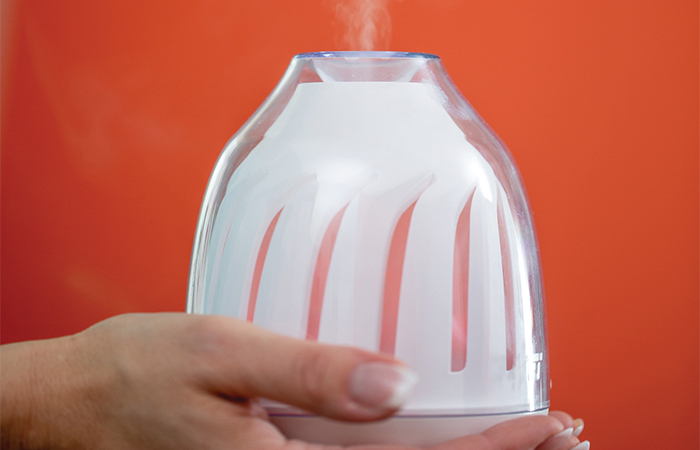
Non-allergic rhinitis is more difficult to treat than allergic rhinitis, but most people can manage their symptoms with self-help measures, avoiding triggers and using pharmacy or prescribed medicines such as corticosteroid or antihistamine nasal sprays. Many OTC medicines for a blocked nose (see page 23) can help to treat non-allergic rhinitis too. Using a humidifier at home or at work may help to ease nasal dryness and irritation.
“Non-allergic rhinitis is more difficult to treat than allergic rhinitis”
Catarrh
Catarrh is a normal reaction to inflammation inside the nose, but it means different things to different people.
It may refer to a build-up of mucus in the nose, sinuses and throat or to the constant need to clear the throat by swallowing or coughing.
Mucus that’s dripping down the back of the throat from the nose is called postnasal drip.
Catarrh may be a long-term problem and cause other symptoms such as a sore throat, a crackling feeling in the ears, feeling sick or a constant cough.
Although catarrh can be annoying and frustrating, a build-up of mucus is not usually anything to worry about. Using corticosteroid nasal sprays, menthol products and saline nasal rinses may help to clear persistent catarrh, but these need to be used regularly and over a long period of time. Some people find that avoiding dairy products in their diet also helps, although there is not yet enough medical evidence to support this, and they should consult a dietitian first. Customers should be referred if catarrh lasts for longer than four weeks.
Sinusitis
Sinusitis (inflammation of the sinuses) is usually triggered by an infection, and can be acute or chronic.
The sinuses, which are small, air-filled spaces inside the cheekbones and forehead, make mucus that drains into the nose. Inflammation of the sinuses can increase the production of mucus, and a blocked nose can stop the sinuses from draining properly.
Sinusitis is one of the Pharmacy First pathways in England and Wales and is usually diagnosed from symptoms alone. It can cause a blocked or runny nose, postnasal drip, facial pain or pressure (over the cheeks and around the eyes), a reduced sense of smell, toothache, earache or ear pressure, headaches and tiredness.
Acute sinusitis is usually associated with a cold, flu or Covid and improves within a few weeks. The symptoms may be eased with rest, keeping hydrated, warm face packs, painkillers, decongestant nasal sprays (five to seven days only), saline nasal washes and steam inhalation.
Antibiotics are only needed for bacterial sinusitis (around two in every 100 cases of sinusitis). A bacterial infection may be suspected if the symptoms are lasting for longer than 10 days, along with a fever and severe pain affecting the teeth and jaw, and corticosteroid nasal sprays are not working.
Chronic sinusitis is the term used when someone has sinusitis that lasts for 12 weeks or more. It causes similar symptoms to acute sinusitis and affects around one in 10 adults in the UK – especially smokers and people prone to allergies. It may be caused or worsened by nasal problems (such as polyps), dental problems or asthma. Many people diagnosed with chronic sinus headaches and no other sinusitis symptoms actually have migraine.
Chronic sinusitis can be difficult to treat, and the symptoms tend to flare up and down. When they worsen, using self-help measures and saline nasal rinses can help. Corticosteroid nasal sprays may help to reduce inflammation in the nose and sinuses when used for six to 12 weeks or more. Avoiding any known sinusitis triggers is also important, including stopping smoking.

Surgery for sinusitis
If severe sinus symptoms cannot be controlled with conventional medical treatments such as corticosteroid nasal sprays, saline rinses and antibiotics, customers may need a referral to an ENT surgeon.
Functional endoscopic sinus surgery is a minimally invasive day case procedure, performed through the nostrils under a general anaesthetic, and can also be used to treat nasal polyps. While this surgery can be effective, not everyone will be eligible, and patients need to consider the risks versus the benefits before making any decisions.
According to a major clinical trial published inThe Lancet last August, sinus surgery is more effective than antibiotics at treating chronic rhinosinusitis. The MACRO Trial was led by University College London, along with academics at the University of East Anglia and Guy’s and St Thomas’ NHS Foundation Trust. More than 500 patients used nasal corticosteroids and saline rinses as part of their usual care (both of which have been shown to help chronic rhinosinusitis) and were randomly assigned either functional endoscopic sinus surgery, antibiotics for three months or placebo tablets. The researchers found that the surgery was effective at relieving sinusitis symptoms, and 87 per cent of trial participants who had surgery were still feeling better six months later. A three-month course of low-dose antibiotics was not found to be helpful.
Nasal polyps
Nasal polyps are soft, fleshy swellings that grow inside the nose or sinuses, often triggered by chronic inflammation. When fully grown, they look similar to grapes on a stem, but are yellowish, flesh coloured, pale grey or pink. The polyps usually affect both nostrils and gradually get bigger and bigger. Around four in 100 people will develop nasal polyps at some stage in their lives.
Large or several nasal polyps can cause a blocked or runny nose, mouth-breathing, postnasal drip, a reduced sense of smell and taste, and breathing problems (especially at night). Sometimes, nasal polyps block sinus drainage, leading to sinusitis.
Nasal polyps are usually diagnosed by an ENT consultant. Medicines are the first-line treatment – usually prescribed corticosteroid nasal drops for at least four to six weeks. As the inflammation inside the nose reduces, the polyps should begin to shrink.
Sometimes an ENT consultant may prescribe a course of prednisolone (steroid) tablets for a week or so.
If the polyps are large or the corticosteroid nose drops or tablets are not working, they may suggest surgery to remove the polyps.
In December 2025, the Medicines and Healthcare products Regulatory Agency (MHRA) approved depemokimab (a twice-yearly biological medicine injection) as an add-on treatment for adults with severe chronic combined rhinitis and sinusitis (rhinosinusitis) with nasal polyps, if other treatments have not worked.
“Many people diagnosed with chronic sinus headaches actually have migraine”
Nosebleeds
Blood vessels inside the nose can break easily for no apparent reason. Nosebleeds are particularly common in children, especially if they pick their nose or are prone to minor injuries, colds or allergies. These nosebleeds are usually mild and easy to treat. More severe bleeding is more common in older people or those with high blood pressure, blood clotting disorders or those taking blood-thinning medicines such as warfarin or aspirin.
If a child under two years old has a nosebleed or anyone has recurrent nosebleeds, they should be referred.
If nosebleeds are caused by crusting and an infection in the nose, an antiseptic cream may be prescribed. It is important that the prescriber knows if the patient is allergic to peanuts or soy, as one particular antiseptic cream contains peanut oil.
Simple first aid can usually stop a nosebleed. This involves:
- Sitting up and leaning slightly forwards (as long as the patient doesn’t feel faint)
- Pinching the fleshy end of the nose (with light pressure using a finger and thumb) to completely block the nostrils
for 10 to 20 minutes to stop the bleeding - Placing a cold flannel or compress around the nose and over the front of the face to help constrict the blood vessels
- If the patient feels faint, they should lie flat on their side
- Once the nosebleed has stopped, they should not pick their nose or try to blow out any of the remaining blood.
If the customer feels very unwell, dizzy or breathless, the bleeding is severe or does not stop within 20 minutes, they should go to A&E. Sometimes, the nose needs to be packed by a doctor or ‘sealed off’ to stop the bleeding. Occasionally, surgery is needed.

Share:


In Conditions